Keep the flavour.
Plan the next bag.
Build a practical coffee-storage routine, reduce repeated exposure, and label frozen portions so your brew journal retains the full context.
Pour a cup. Settle in.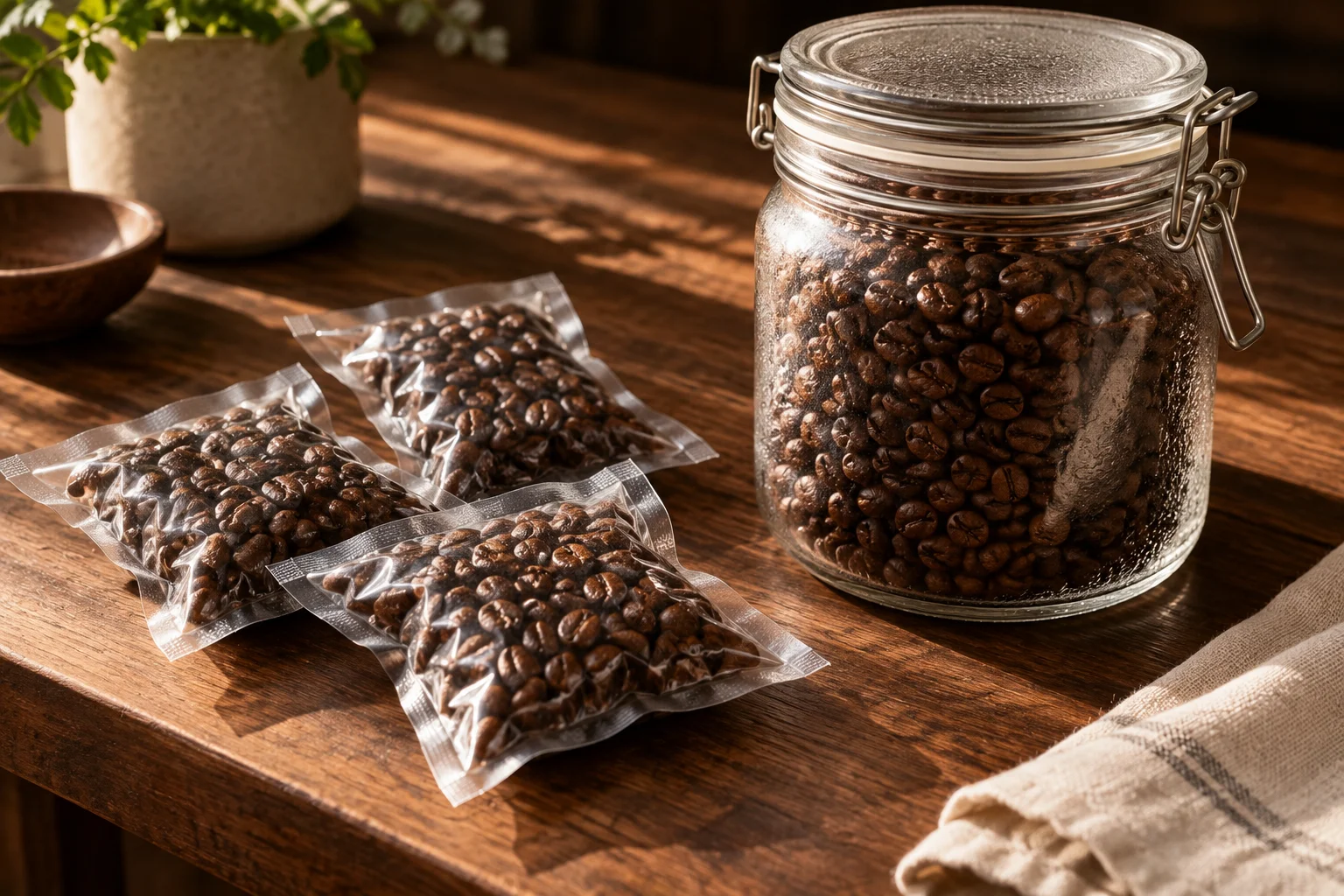
Begin with the everyday bag
Coffee storage is about managing exposure and keeping a routine you can repeat. Oxygen, temperature, moisture, and time influence staling. The Specialty Coffee Association’s literature review describes these interacting factors; no attractive container removes the need to think about how you use it.
Keep your daily coffee in packaging or a container suited to limiting unwanted exposure, away from heat and moisture. Follow the roaster’s guidance. A bag beside a hot appliance experiences a different environment from one in a cool cupboard.
Preserve the coffee’s identity, roast date, and opening date if you transfer it. A beautifully organized shelf is not very useful if every container has become an anonymous dark roast.
Why portioning can make freezing practical
Freezing can slow changes in roasted coffee, but the handling routine matters. If you choose to freeze beans, use well-sealed packaging suitable for the purpose and divide the coffee into amounts that fit your brewing schedule.
Portioning reduces the need to repeatedly open a cold container for a small dose. Label each portion with the coffee, roast date, freeze date, and amount. Those labels let you interpret a later brew instead of trying to remember which unmarked packet came from which bag.
Freezing does not restore aroma already lost before storage. Think of it as preserving a useful starting state, not resetting the coffee’s history. Keep the pre-freeze age in the record.
| Track | What it tells you |
|---|---|
| Coffee and roast date | Identifies the ingredient and its initial timeline |
| Opening and freeze dates | Preserves the storage history |
| Portion mass | Matches the packet to a dose or short usage period |
| Package type | Helps you repeat the storage method |
| Thawing or direct-grind method | Explains how the portion reached the grinder |
Know your beans.
Enjoy their story.
Keep a coffee bean shelf with roast context, freshness references, and linked brewing records in BrewTrax.
Explore Coffee Bean Inventory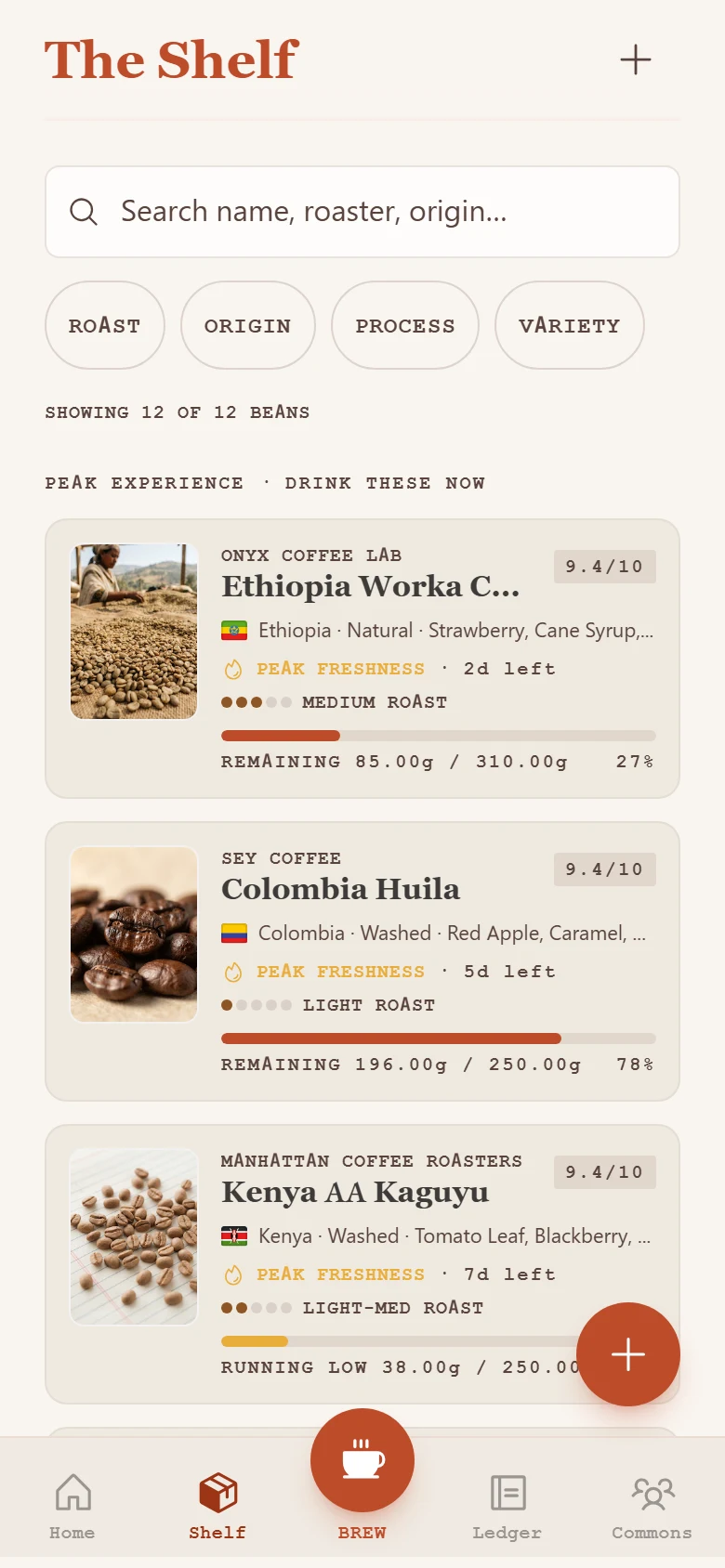
REMEMBER THE CUP.
Keep condensation and repeated exposure in mind
A practical approach is to let a sealed portion come to room temperature before opening it, reducing the chance of moist room air condensing on cold beans. If you use a different established workflow, record it consistently rather than mixing methods without a note.
Avoid repeatedly warming and refreezing the same daily container as an accidental habit. Small, clearly labeled portions are easier to manage. Follow the guidance for your storage equipment and packaging, and do not assume every household container provides the same barrier.
Some brewers grind frozen beans directly. If you explore that approach, check your grinder manufacturer’s guidance and record it as a distinct condition. Do not compare it with room-temperature grinding while treating temperature as unchanged.
Let a comparison guide your routine
When you open a stored portion, brew a familiar recipe and note aroma, sweetness, body, and finish. Keep the storage record attached to the brew. A pleasant result is useful evidence for your routine, not proof that the same method preserves every coffee indefinitely.
If you want a comparison, reserve equivalent portions of the same bag and document their different storage conditions. Taste at similar temperatures and avoid changing the brew recipe simultaneously. The exercise can teach you what is worth the effort in your kitchen.
BrewTrax’s bean shelf and ledger connect those choices to the cup. The best system is one that keeps coffee identifiable, limits unnecessary exposure, and makes it easy to brew what you already own.