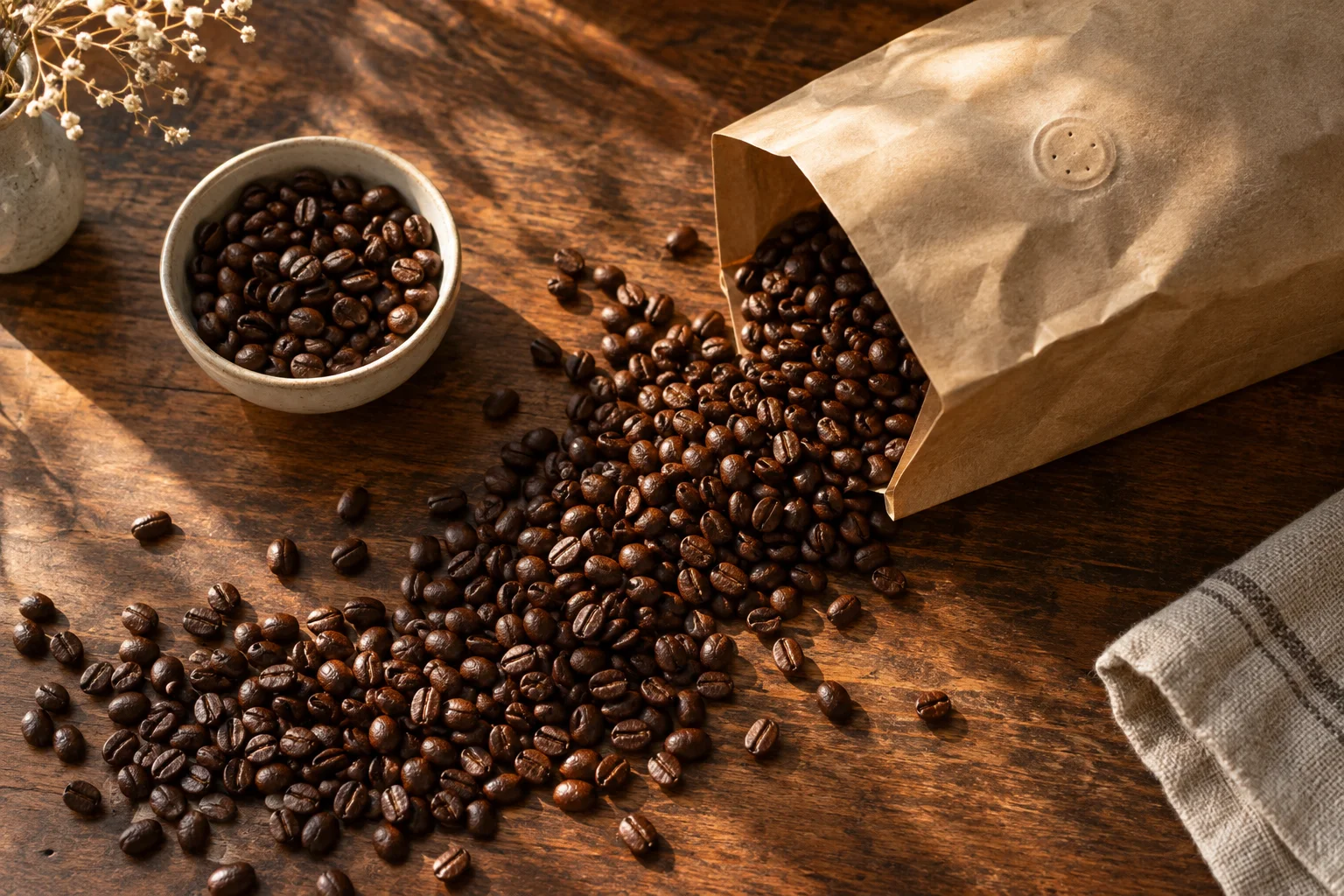
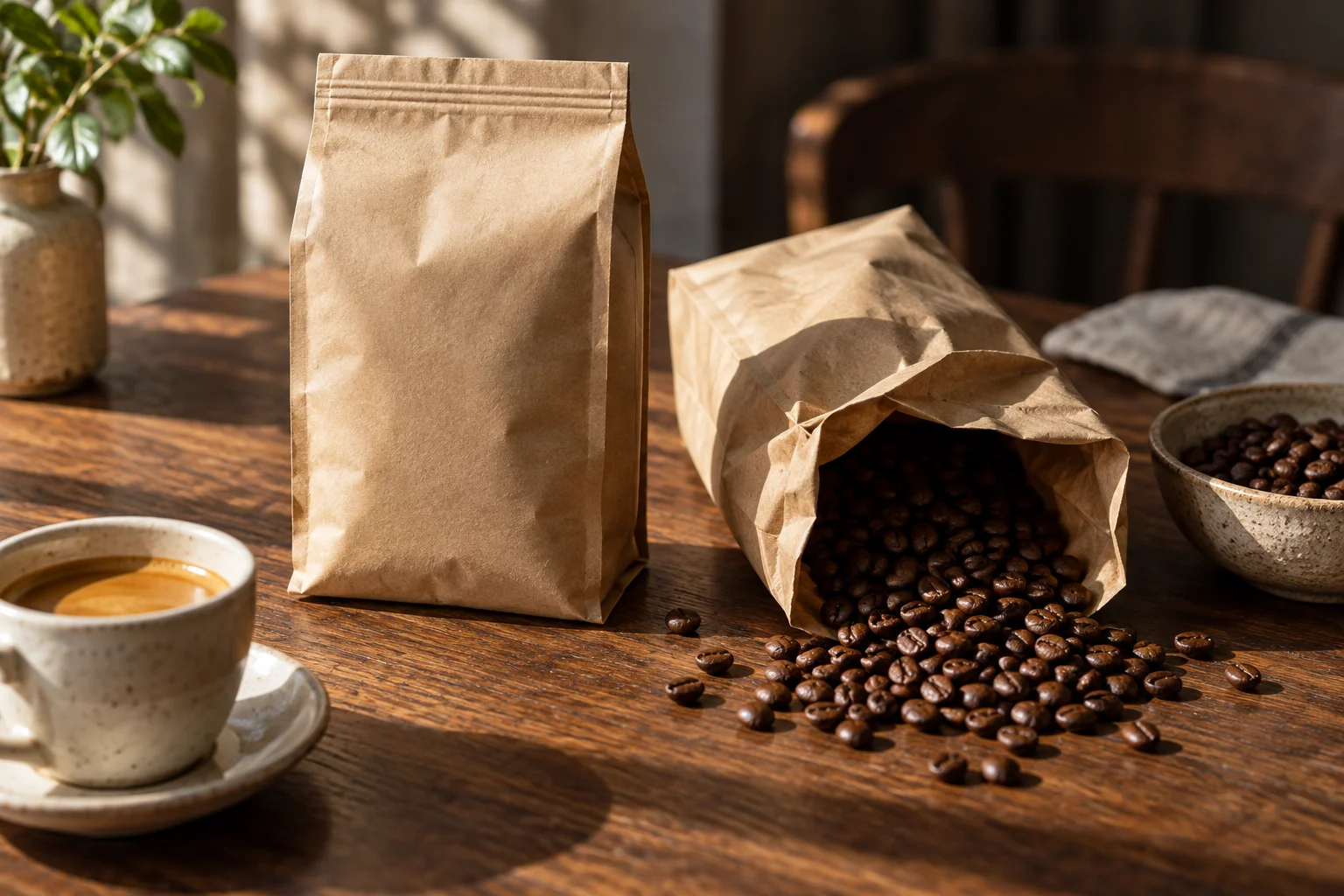
The same bag.
A changing cup.
Learn how roast age, degassing, oxygen, and storage affect coffee flavor, and why freshness belongs beside your recipe.
Pour a cup. Settle in.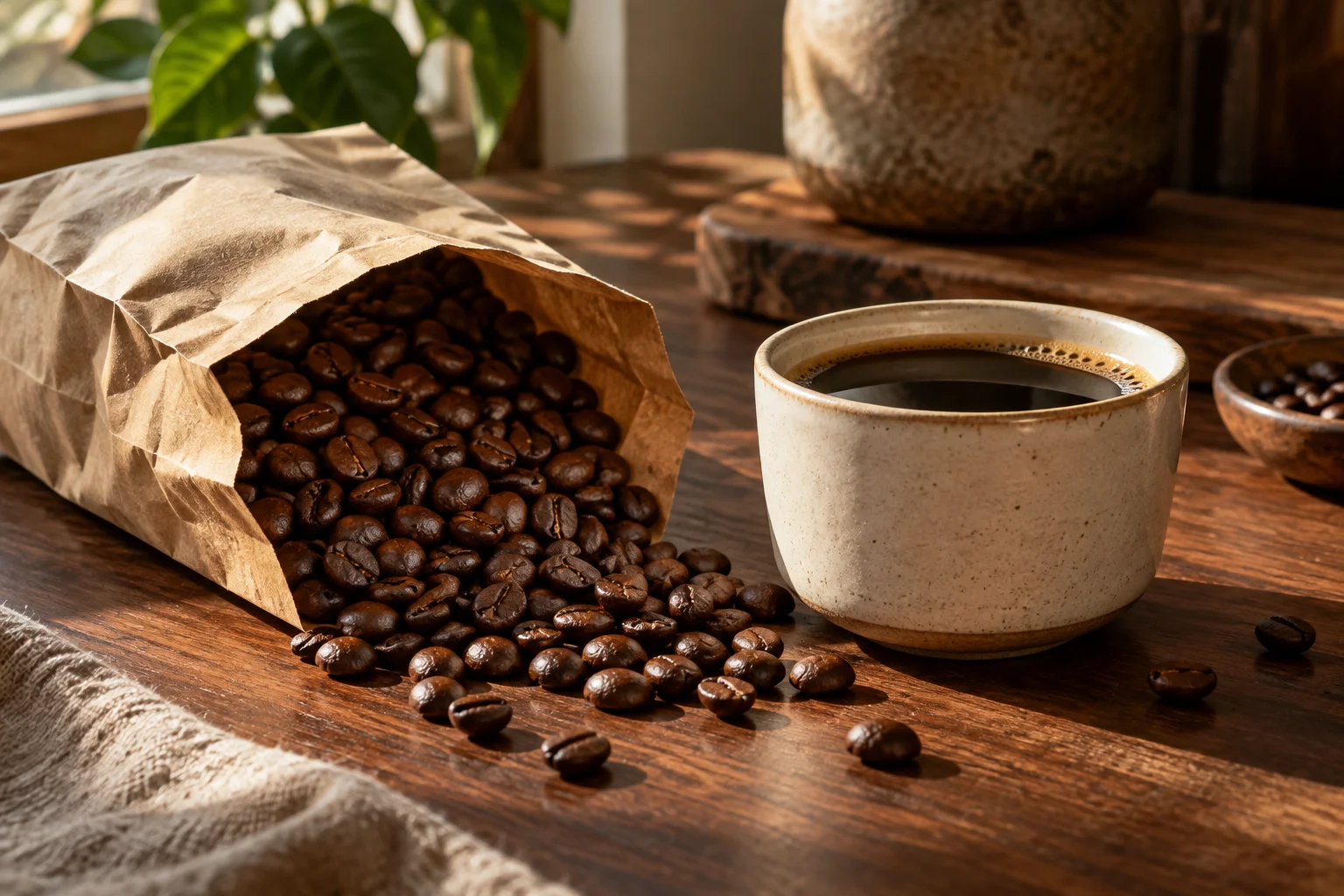
Coffee keeps changing after roasting
Roasting does not freeze a coffee at one perfect moment. Roasted beans release gas, aromatic compounds change, and exposure to oxygen and the surrounding environment affects how the coffee develops. The Specialty Coffee Association’s freshness resources describe freshness as more complex than a single number on a bag.
That matters when a recipe you enjoyed suddenly tastes different. The grinder may be untouched and your pouring may be steady, yet the ingredient has changed. A roast date gives that change a timeline. An opening date and storage note add the context the roast date cannot provide alone.
Freshness is not the same as “as soon after roasting as possible.” A coffee can benefit from resting before it becomes easy to brew in the style you prefer. The useful question is when this coffee tastes best to you with your method.
Notice the flavor, not just the bloom
You may notice changes in aroma, sweetness, texture, or how the brew behaves. A prominent bloom can indicate gas release, but it is not a direct score for cup quality. Similarly, espresso crema should not replace tasting as the test of whether a coffee is enjoyable.
Do not assume every difference is caused by age. Water, grind, temperature, and execution can change the cup too. Keep a stable recipe for a few observations if you want to understand the bag’s progression.
Write notes at a similar drinking temperature. “More sweetness once warm; less lively aroma than last week” says more than “old.” Avoid declaring a coffee unusable simply because it has crossed a generic date threshold.
| Track | What it tells you |
|---|---|
| Roast date | Time since the coffee was roasted |
| Opening date | Time since you first opened this package |
| Storage | The conditions between brews |
| Brew recipe | Whether your comparison is reasonably consistent |
| Taste over time | Your own preferred window for this coffee |
Know your beans.
Enjoy their story.
Keep a coffee bean shelf with roast context, freshness references, and linked brewing records in BrewTrax.
Explore Coffee Bean Inventory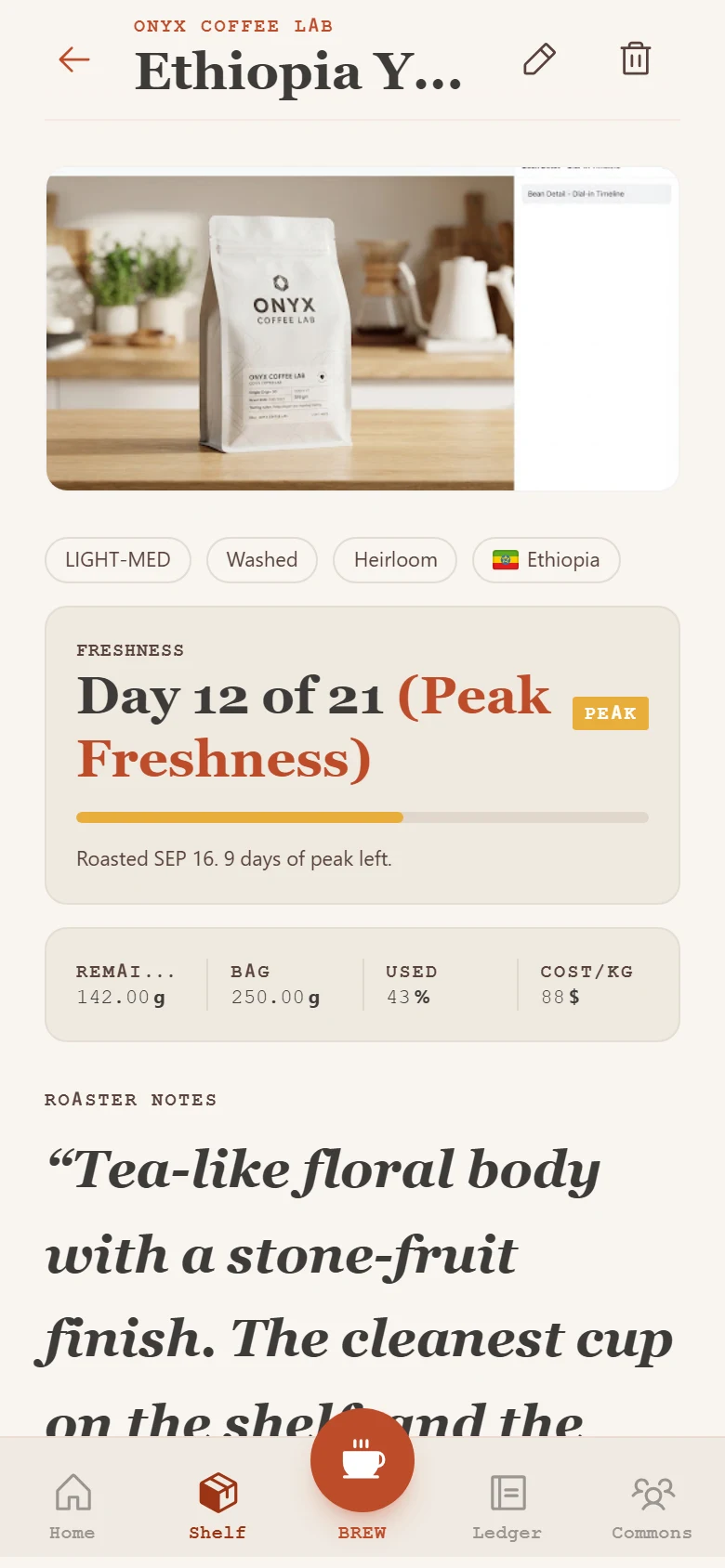
REMEMBER THE CUP.
A freshness window is a starting guide
There is no single peak day that applies to every coffee. Roast style, processing, packaging, storage, and brew method all affect the experience. A roaster’s recommendation is useful context, especially when you are unfamiliar with the coffee.
BrewTrax’s freshness indicators give a convenient reference as you look through your bean shelf. Treat them as prompts to check the dates and taste, not as a universal scientific deadline. Your actual notes should decide whether to keep a recipe, adjust it, or move to another bag.
If you do not know the roast date, leave that uncertainty clear. Record the purchase or opening date instead of inventing a roast date to make the interface look complete. A truthful partial record is more useful than false precision.
Let the shelf inform tomorrow’s brew
Before opening another bag, look at what you already have. Choose a coffee intentionally, read its recent entries, and use the last enjoyable recipe as your baseline. That small routine connects inventory to taste rather than treating the shelf as a list of purchases.
If a bag seems to change, make one modest recipe adjustment and save the outcome. Do not overhaul the entire technique on the assumption that age alone explains everything.
The most valuable freshness record is personal and specific: this coffee, stored this way, tasted like this on these days. After a few bags, those observations can help you plan purchases, choose opening dates, and waste less coffee without chasing an imaginary universal peak.