One bag.
A small discovery.
Follow one coffee across several brew days with a stable recipe and a simple comparison sheet to discover your own preferred freshness window.
Pour a cup. Settle in.
Ask a question your kitchen can answer
Instead of asking for the perfect age for all coffee, ask a smaller question: when do I enjoy this bag most with this recipe? That question is specific enough for a home journal to help.
Choose one coffee, one method, and a recipe you can repeat. Record roast date, opening date, storage, and equipment. Decide on three or four brew days that fit your normal routine. For example, you might compare several points during the next two weeks rather than making extra cups just for the experiment.
The dates are a sampling plan, not a claim about the ideal resting period. Follow any useful starting guidance from the roaster, especially if the coffee is unfamiliar.
Keep the comparison reasonably steady
Use the same dose, water amount, grinder reference, filter, and water source. Keep the storage routine consistent. If you must change something, note it. An honest record of imperfect conditions is better than pretending the experiment was fully controlled.
Use the same time convention and pour schedule. Taste at a similar stage of cooling. Your own mood and palate can vary, so a single score should not carry the whole conclusion.
Write observations before reading previous notes if you can. This can reduce the temptation to taste what you expect. You do not need formal blind testing to make your journal more thoughtful.
| Track | What it tells you |
|---|---|
| Brew day and roast age | Where the cup sits on the timeline |
| Opening age and storage | The package’s daily conditions |
| Recipe deviations | Anything that weakens the comparison |
| Warm and cooled tasting notes | How the cup develops |
| Preference and next action | Whether to repeat, adjust, or keep observing |
Discover your taste.
One cup at a time.
Capture coffee ratings, sensory notes, and brewing patterns with BrewTrax tasting records and personal insights.
Explore Coffee Tasting Notes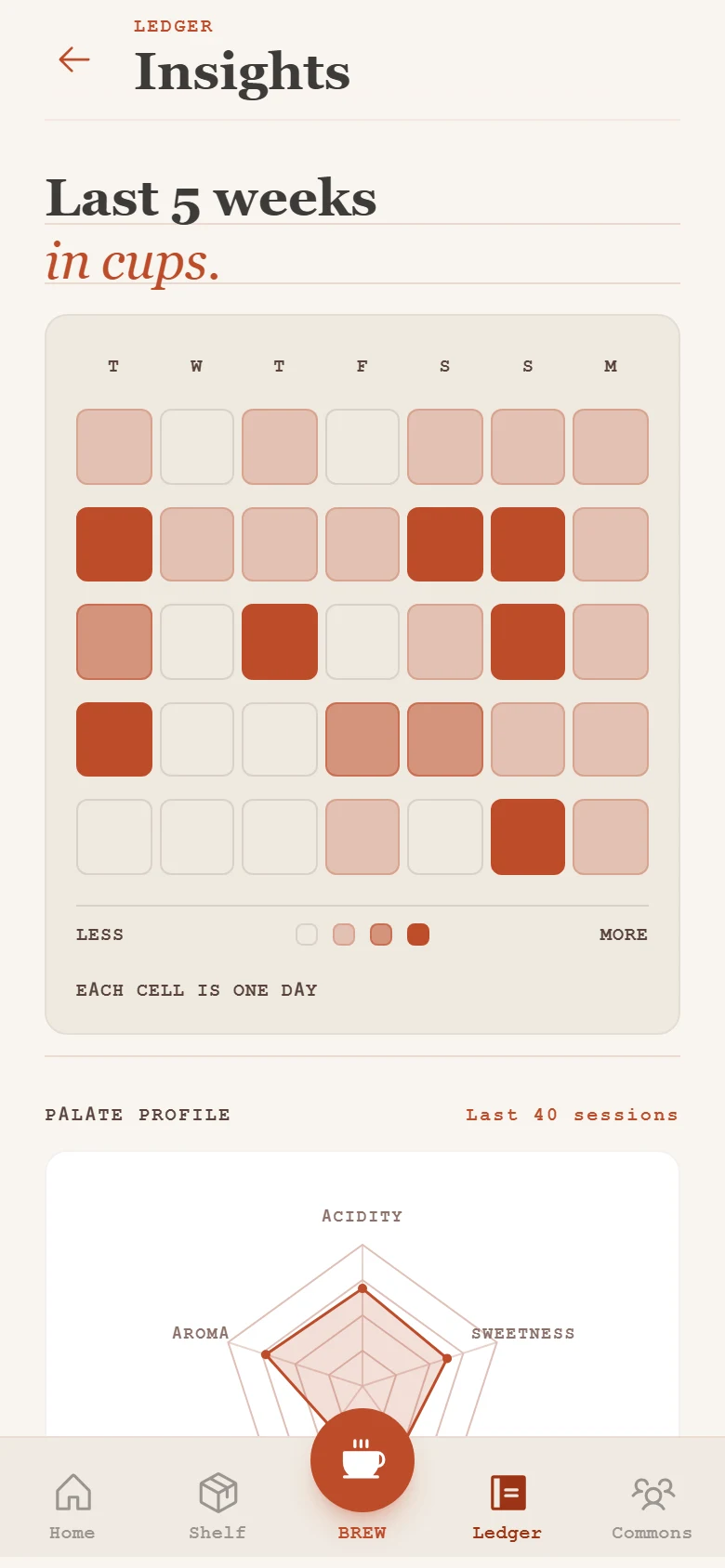
REMEMBER THE CUP.
Look for a pattern, not a perfect curve
The coffee might become easier to brew, feel sweeter, lose some aroma, or change in ways you do not clearly prefer. It may also seem similar across several days. “No obvious difference” is a legitimate result.
Avoid drawing a precise peak from one favorite cup. A better conclusion might be “I enjoyed the middle two observations more, especially the texture.” That leaves room for normal brew variation and future bags.
If you adjust the recipe to keep the coffee enjoyable, mark that as a different question: how should I adapt as this bag changes? Both questions are useful, but a changing recipe cannot isolate the effect of age.
Use the result on the next bag
At the end, choose one preferred entry and explain why. Save the recipe with its dates. If you buy the same coffee again, use the observation as a starting expectation rather than a promise that the exact day will repeat.
In BrewTrax, insights and tasting history help you review the sequence without losing the individual cups. The story is more informative when the notes explain the ratings: a sweet finish, calmer flow, or a texture you kept returning to.
You may learn that a complicated freshness routine is unnecessary for your preferences. Or you may discover that waiting a little longer makes a favorite coffee more enjoyable. Either outcome is useful because it comes from your own documented cups.