Two dates.
One better picture.
Learn the different roles of roast date and opening date, and how to keep a useful bean record when either date is missing.
Pour a cup. Settle in.
They answer different questions
Roast date tells you when the coffee was roasted. Opening date tells you when you first opened that particular package. Neither replaces the other. A bag can be several weeks off roast but newly opened, or recently roasted and repeatedly opened over several days.
This distinction matters because the coffee’s storage history influences what you taste. The date on the roaster’s label gives you one starting point; your own opening note connects that package to your daily routine.
Record both when you know them. Add the coffee identity and roaster so the dates belong to a specific bag rather than an abstract entry called “Colombia.” If you buy the same coffee again, a separate bag record avoids mixing two different timelines.
Keep the record simple and honest
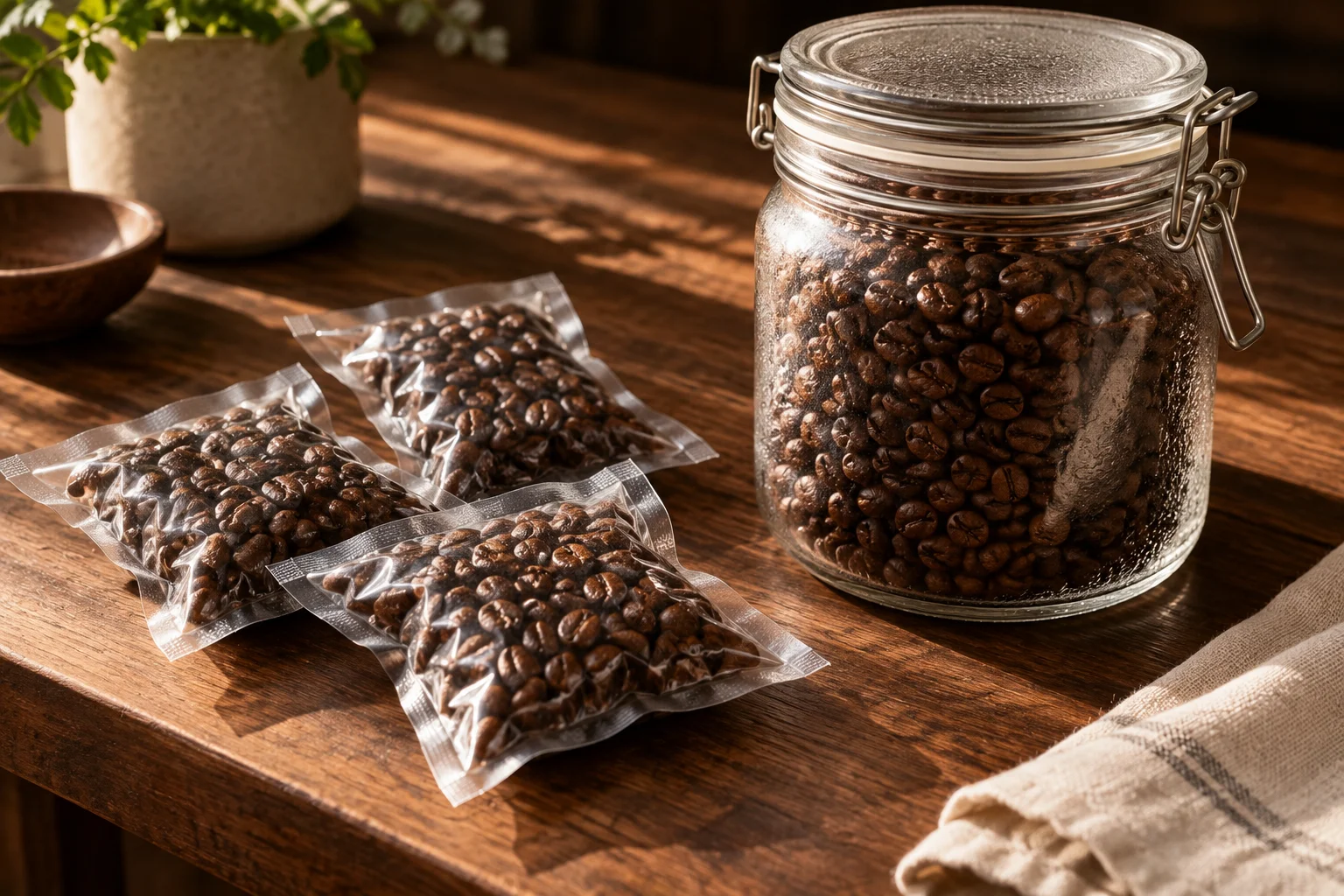
Enter the printed roast date exactly, checking the date format if the label is ambiguous. Record the day you open the bag. If you transfer the beans to another container, note that change and preserve the label information.
If no roast date is supplied, do not substitute a best-before date as though it were the same thing. A purchase date can still be useful if you name it correctly. The aim is not to fill every date field; it is to keep a truthful history.
BrewTrax gives bean information a home beside brewing records. When your version’s structured fields do not capture a particular storage event, add it clearly in the bean or brew notes rather than losing the context.
| Track | What it tells you |
|---|---|
| Roast date | How long since roasting |
| Opening date | When this package entered your daily routine |
| Purchase date | Useful context when roast date is unknown |
| Container change | A change in storage conditions |
| Frozen or thawed | A distinct storage event, with a date |
Know your beans.
Enjoy their story.
Keep a coffee bean shelf with roast context, freshness references, and linked brewing records in BrewTrax.
Explore Coffee Bean Inventory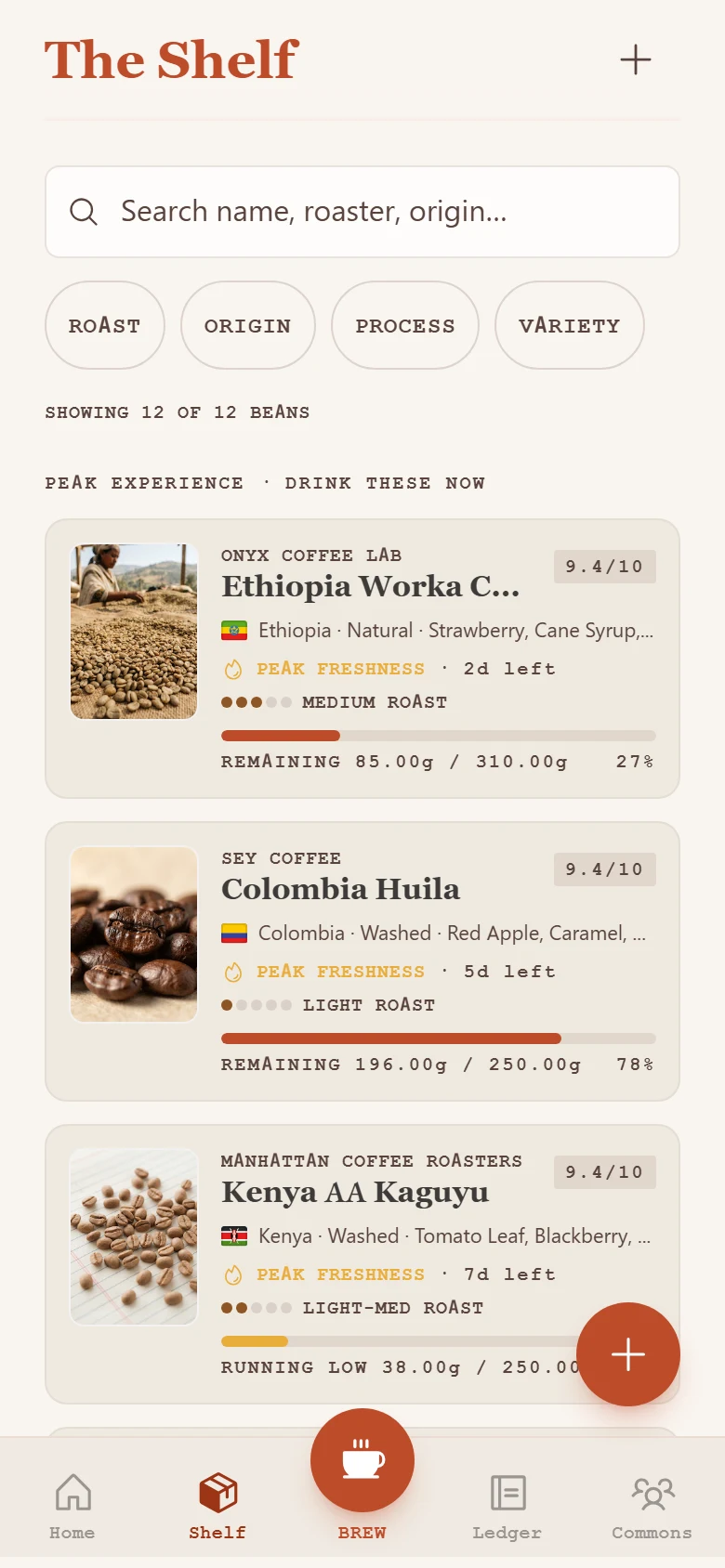
REMEMBER THE CUP.
Use both dates when taste changes
Imagine two bags roasted on the same day. One stays sealed while the other is opened daily. Their matching roast dates do not prove they will taste identical later. Packaging, air exposure, and the surrounding environment also matter.
Now imagine two brews from one open bag a week apart. If the recipe changed between them, the date alone cannot explain the difference. Compare dose, grind, water, and method before deciding that freshness caused the change.
A helpful note might read: “Day 18 off roast, day 4 open; same recipe, softer aroma and rounder sweetness.” It describes the observation without pretending to isolate every cause.
Turn dates into a useful shelf routine
Before opening a new bag, review the open ones. Choose which coffee you want to brew next and whether the current recipe still suits it. This simple habit can reduce forgotten half-bags and make your purchases more intentional.
Do not turn dates into automatic discard rules. Freshness indicators are guides to attention, not universal boundaries between good and bad coffee. Use safe storage practices and your sensory observations within the relevant product guidance.
Over time, keeping both dates helps you distinguish your preferred post-roast window from your preferred routine after opening. That is information you can actually use when ordering, resting, and brewing the next bag.