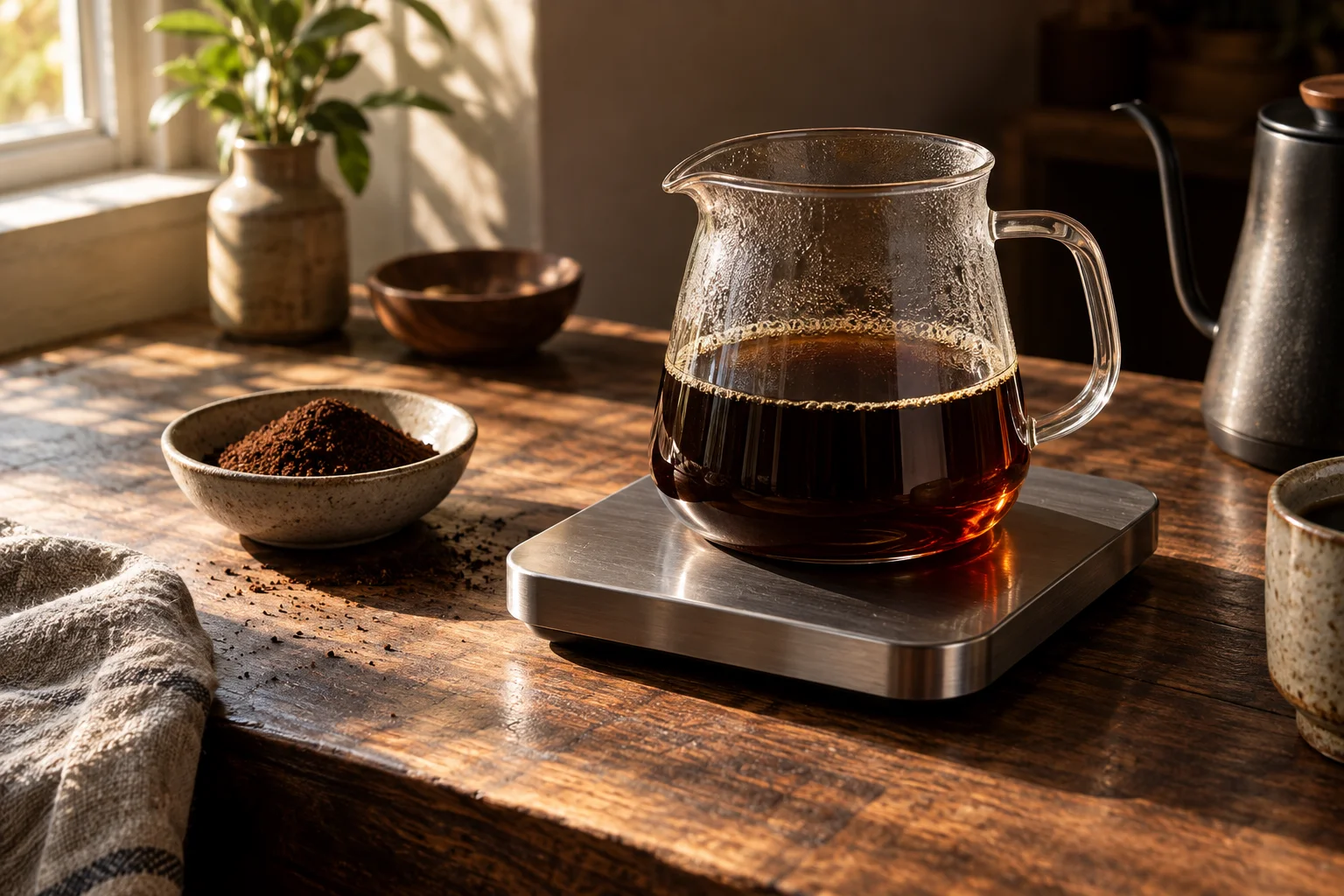
A great cup
is worth
remembering.
Why tracking your coffee brews is the small habit that makes your next cup more intentional.
Pour a cup. Settle in.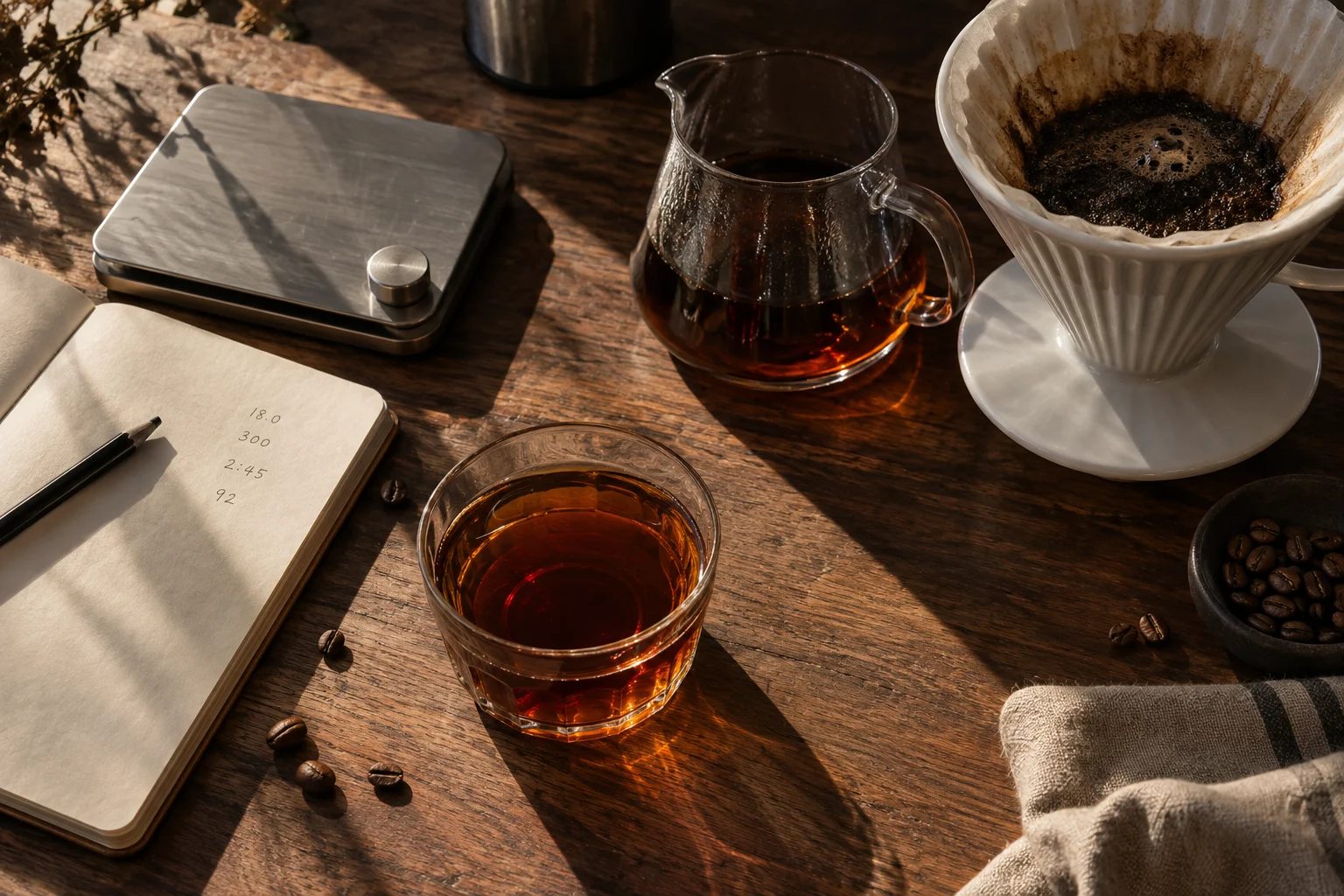
You know that cup. The one that tastes a little sweeter, feels a little silkier, and makes you pause halfway through your morning.
Then you try to make it again. Same coffee. Same brewer. Somehow, a different result. Was the grind a touch finer? Did you use more water? Was that bag a week further off roast?
A coffee journal gives those questions somewhere to land. It connects what you did with what you tasted, so a delicious accident can become a recipe you understand.
Good coffee deserves
a little more than memory.
You do not need to turn breakfast into a laboratory experiment. You need a few reliable details: the beans, the recipe, and a sentence about the cup. Written down together, they give your next brew a useful starting point.
Tracking also makes an ordinary cup valuable. If it tastes thin, dry, or unexpectedly sharp, you have a record to compare with the next attempt. Instead of changing everything and hoping, you can make a deliberate adjustment.
Keep the recipe.
Remember the feeling.
The numbers explain how you brewed. Your tasting notes explain why you would—or would not—brew it that way again. A useful journal needs both.
What is actually worth tracking?
Start with the details you can repeat. These six give you a useful record without making the ritual feel like paperwork.
- The coffee
- Bean name, roaster, roast date, and when you opened the bag. “Ethiopia” alone is not enough to find that exact coffee again.
- The method
- The brewer and filter you used. An espresso recipe and a V60 recipe need different context.
- Dose & water
- Record grams of coffee and brewing water. For espresso, record the beverage yield instead of treating it like pour-over water.
- The grind
- Name the grinder and its setting. Twenty clicks on one grinder does not translate directly to another.
- Time & temperature
- Note your water temperature and brew time, plus meaningful stages such as the bloom or individual pours.
- How it tasted
- Sweet, bright, heavy, dry, or simply “I want this again.” Use words that mean something to you.
If six details feel like too much, begin with dose, water or yield, grind, and one tasting note. You can add precision as your questions become more specific.
Your beans change, too.
A bag is not a fixed ingredient. Coffee releases gas after roasting and changes during storage. The Specialty Coffee Association’s freshness explainer describes why roast age matters. Record the date, then use taste to judge your own coffee—there is no single peak day for every bag.
One change.
A much clearer lesson.
Imagine a V60 that tastes a little thin. You could change the dose, grind, temperature, and pouring pattern at once. If the next cup improves, though, you will not know which change helped.
Instead, keep your recipe steady and try a slightly finer grind. Record the result. A single comparison is not proof—pouring and beans still vary—but it gives you a clearer direction for the next attempt.
Same recipe.
A new observation.
Two example entries. One deliberate adjustment.
Select a brew to see what the record tells you.
- Coffee
- 15g
- Water
- 250g
- Temperature
- 94°C
- Grind adjustment
- Baseline
“Bright, but a little thin. The sweetness disappears quickly.”
Your morning ritual.
With a memory.
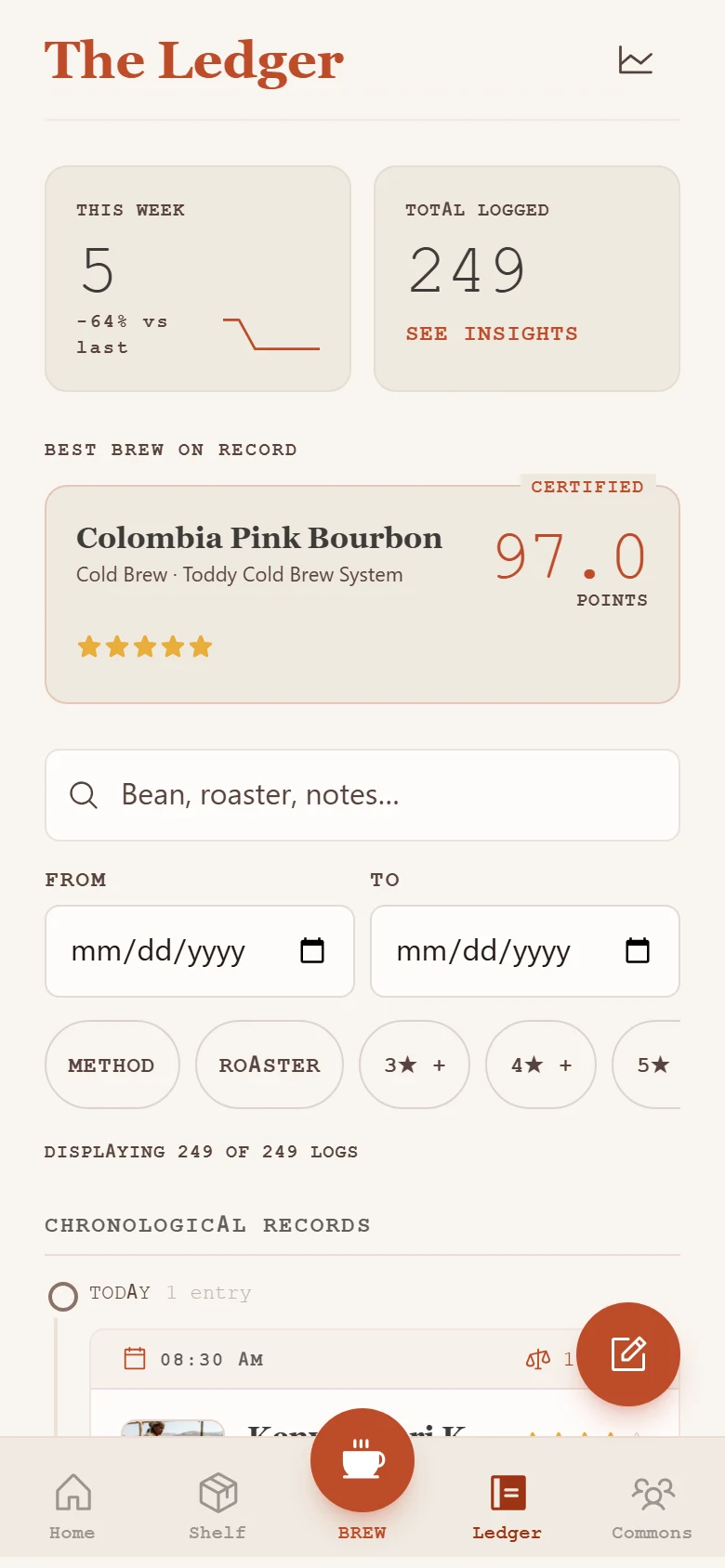
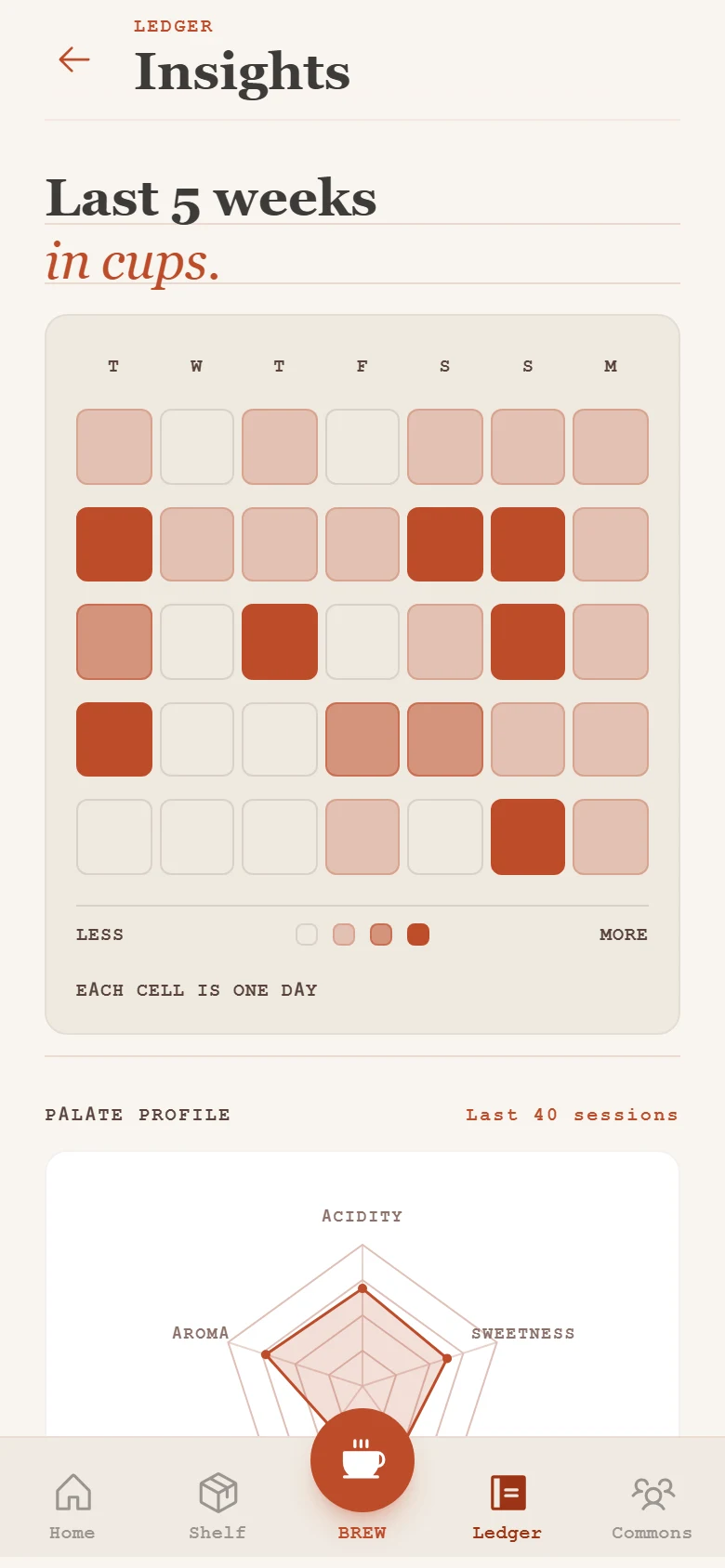
BrewTrax brings your beans, recipes, and tasting notes into one coffee ledger. The brew you just made becomes a starting point for the one you make tomorrow.
- Find your way back. Revisit a brew with its recipe and tasting notes together.
- See the bigger picture. Explore your brewing history and the flavors you keep coming back to.
- Make it your own. Keep espresso mornings and slow pour-over weekends in the same journal.
NOT HOMEWORK.
Start with your next cup.
Choose a recipe you already enjoy. Brew it, save the basics, and write one honest sentence before the taste slips away. “Sweet as it cooled; a little dry at the finish” will help you more than a perfect-looking score with no explanation.
Next time, look at that entry before you pick up the kettle. Repeat it if you loved it. Change one thing if you did not. Taste again, and keep the observation.
Established recipes are useful reference points. In HARIO’s guide with Tetsu Kasuya, the coffee dose, water temperature, and individual pours are written out explicitly. That level of detail gives you something concrete to repeat and adapt. Your journal can do the same for your own daily recipe.
And when you find a brew worth passing on, share the details—not just a photograph. BrewTrax’s Commons lets you publish recipes and discover what other brewers are making. Someone else’s starting point might become your next favorite.
You do not have to remember every cup.
Just give the good ones a way back.
A few good questions.
Do I need expensive equipment to track my coffee?
No. Start with the brewer you own. A scale makes dose and water easier to repeat, but a timer and a short note are already useful. Record the tools you actually use.
Should I log every single brew?
Only if it helps you. Logging when you open a new bag, try a recipe, or make an adjustment can be enough. A habit you enjoy is more useful than an exhaustive record you abandon.
Can I compare different brewing methods?
Yes, but compare your preferences rather than treating all measurements as interchangeable. Espresso yield, pour-over water, and cold-brew dilution describe different things. Keep the method attached to every entry.
Further reading
Specialty Coffee AssociationWhat is “freshly roasted” coffee?HARIO Europe
Tetsu Kasuya’s V60 recipe & interview