A small habit.
A better next cup.
Build a coffee-journaling habit with a quick brew log, useful tasting notes, and a simple weekly review.
Pour a cup. Settle in.
Make the first entry small
A coffee journal earns its place when you look at yesterday’s cup and know what to do today. That is a much more useful goal than filling every field. Begin with a recipe you already make: your usual coffee, brewer, dose, water or espresso yield, and grinder setting. Add one sentence after tasting.
Keep the entry short enough to finish while your cup cools. “Sweet at first, dry after swallowing; repeat with slightly less agitation” gives you a decision. A page of numbers without a tasting observation gives you a record, but very little direction.
Put the journal where the habit happens. Open BrewTrax before you grind, select your beans, and revisit the last brew. This connects recording to an action you already do instead of adding a separate chore at the end of the day.
Use a before-and-after rhythm
Before brewing, save your intended recipe. After brewing, record what actually happened. These are not always the same: you might overshoot the water, pour later than planned, or notice a slow drawdown. Preserve that difference. Otherwise a recipe that looks perfect on paper may describe a cup you never made.
A timer is helpful, but avoid making time the only definition of success. Two brews can finish together and taste different. Note the coffee’s identity and filter too, especially when you change either one. Keep enough context that a future version of you can understand the entry.
| Moment | What to capture |
|---|---|
| Before | Coffee, method, dose, target water or yield, grinder and setting |
| During | Meaningful deviations: a late pour, overshoot, or unusual flow |
| After | One sensory observation and one next action |
The thirty-second version
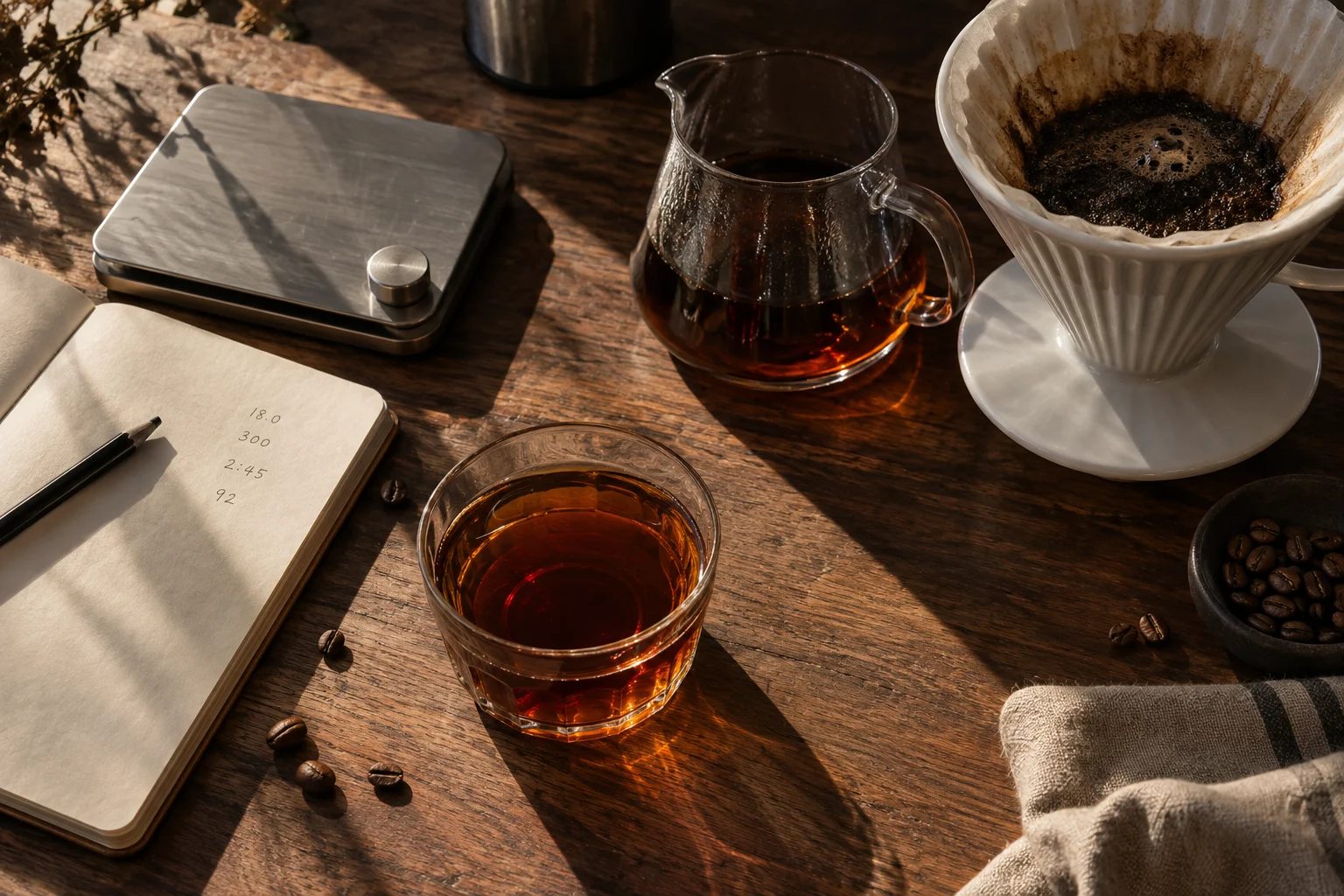
15 g / 250 g · V60 · grinder setting 22 · sweet as it cooled, slightly dry finish · next time use a gentler final swirl.
Every brew.
A way back.
Track coffee recipes, beans, grind settings, brew steps, and tasting notes across your favorite methods with BrewTrax.
Explore Coffee Brew Tracking App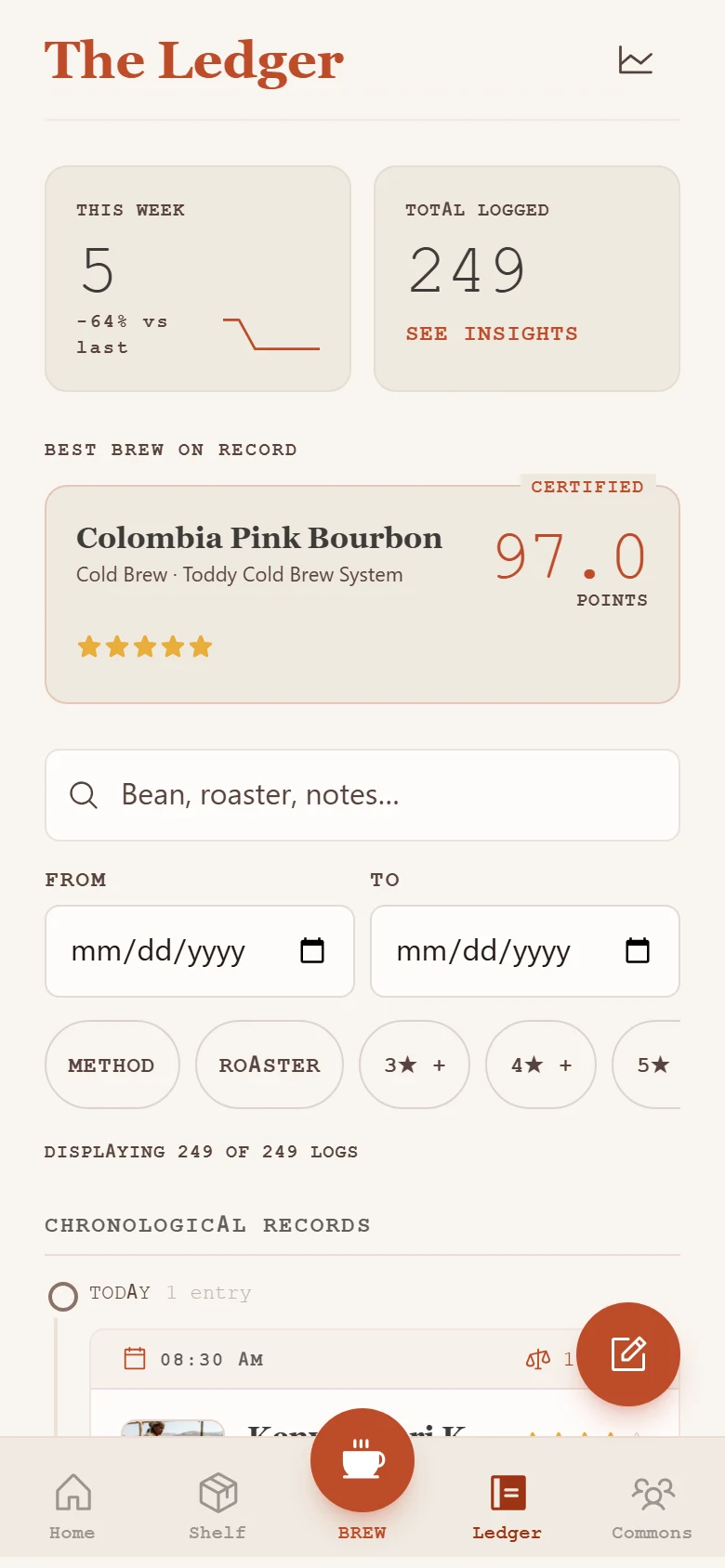
REMEMBER THE CUP.
Review a few cups, not every number
Once a week, choose one favorite and one disappointing brew. Compare the recipe and the circumstances. Were they from the same bag? Did you drink one with milk and the other black? Did your favorite happen after a longer rest? These questions prevent a star rating from becoming a misleading verdict on a recipe.
Look for a repeatable preference rather than a universal rule. You might prefer a shorter ratio for one coffee and a longer ratio for another. A journal helps you notice that distinction. It does not need to prove that a setting is objectively best.
If you miss a day, resume with the next cup. Do not reconstruct exact numbers from a vague memory. A useful gap is better than a confident-looking guess. Log more often when opening a new bag or learning a method; log less when a familiar recipe is working.
Turn the note into tomorrow’s recipe
End each entry with a choice: repeat, adjust, or explore. Repeat a cup you enjoyed before assuming the result is stable. Adjust one deliberate variable when you have a specific question. Explore when you want a different style altogether, and mark that brew as an experiment.
BrewTrax brings those records together across methods. Your espresso before work and French press at the weekend belong to the same coffee life, while their measurements retain their own meaning. Start with three consecutive entries. After the third, open the first again: if it helps you decide what to brew, the habit is doing its job.
- Choose a familiar recipe and save the basics.
- Taste after the first sip and again as the cup cools.
- Write one observation in your own language.
- Read it before the next brew.