Keep the flavour.
In your own words.
Write useful notes about coffee sweetness, acidity, body, aroma, and finish without needing a professional vocabulary.
Pour a cup. Settle in.
Use words you recognize
You do not need to identify a rare fruit to write a useful tasting note. “Juicy,” “chocolate-like,” “light,” “heavy,” and “dry at the finish” can all help you repeat a cup you enjoyed. The best vocabulary is one you understand when you open the record next week.
A flavor resemblance is an association, not a list of ingredients. A coffee that reminds you of berries does not necessarily contain berry flavoring. Record what it evokes without feeling obliged to match the roaster’s tasting card. That card can prompt attention, but should not replace your experience.
Start by asking whether you like the cup, and then why. A rating gives you a quick way to find favorites. A sentence explains what made them favorites. Together they are more informative than either one alone.
Try five simple lenses
Smell the coffee, take a sip, and notice texture and finish. Organize observations around aroma, sweetness, acidity, bitterness, and body. You do not have to score every dimension every time. Pick the ones that explain what stood out.
Acidity can feel lively, juicy, sharp, or muted. Body describes the sensation of weight or texture, not merely how strongly flavored the cup seems. Sweetness is an impression in the brewed coffee; it is different from adding sugar. Bitterness can be pleasant or distracting depending on balance and preference.
Finish deserves a sentence of its own. Does the flavor linger pleasantly, fade quickly, or leave a drying feeling? That observation often points to a useful comparison in the next brew.
| Vague note | More useful note |
|---|---|
| Good | Sweet and rounded as it cooled; soft cocoa finish |
| Sour | Sharp first sip, little sweetness, lighter body than yesterday |
| Strong | Intense flavor, heavy texture; pleasant after adding milk |
| Bitter | Roasty aroma, bitter finish that lingers after swallowing |
Discover your taste.
One cup at a time.
Capture coffee ratings, sensory notes, and brewing patterns with BrewTrax tasting records and personal insights.
Explore Coffee Tasting Notes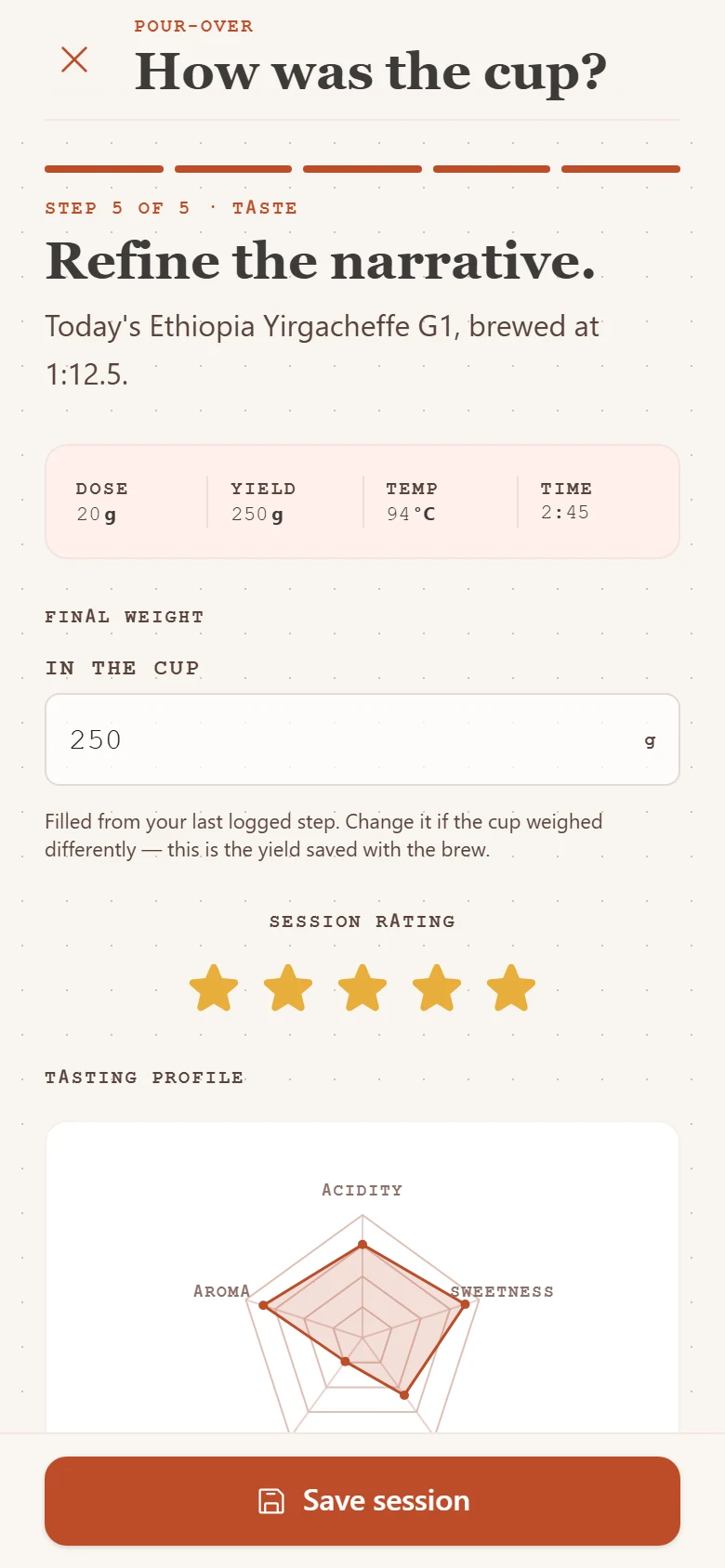
REMEMBER THE CUP.
Let the cup change
Taste once while warm and again after a few minutes. Use a comfortable drinking temperature; there is no benefit in burning your tongue to keep a schedule. Notice whether sweetness becomes clearer or a sharp edge settles down.
Write the temperature context in plain language: “best once warm” or “dryness became more noticeable as it cooled.” You do not need a thermometer to make that useful. When comparing two cups, taste them at similar stages rather than comparing a fresh brew with one that has sat for twenty minutes.
Record additions too. Milk, sugar, dilution, and ice change the drink you are evaluating. A favorite espresso for a milk drink may not be your preferred straight shot. Your journal should reflect how you actually drink coffee.
Connect the sensation to the next brew
Keep observations separate from explanations. “Thin” is an observation. “I need a finer grind” is a hypothesis. Writing both makes the next attempt a meaningful test.
BrewTrax’s tasting records and insights help you revisit the qualities you enjoy across beans and methods. A pattern in your notes can suggest a preference, but it is not a professional assessment of the coffee or a blind sensory test. The goal is a more satisfying next cup.
Try this format today: “It reminds me of ___. The texture feels ___. As it cools, ___. Next time I will ___.” Leave a blank if nothing comes to mind. A short honest note is better than a polished description you do not believe.
An example worth keeping
“Orange-like brightness, light texture, sweeter once warm. The finish is a little dry. Next time I will repeat the ratio and use a gentler final swirl.”