A stovetop classic.
Its own kind of brew.
Record moka pot size, water level, coffee basket, heat, flow, and taste while following the brewer’s safety instructions.
Pour a cup. Settle in.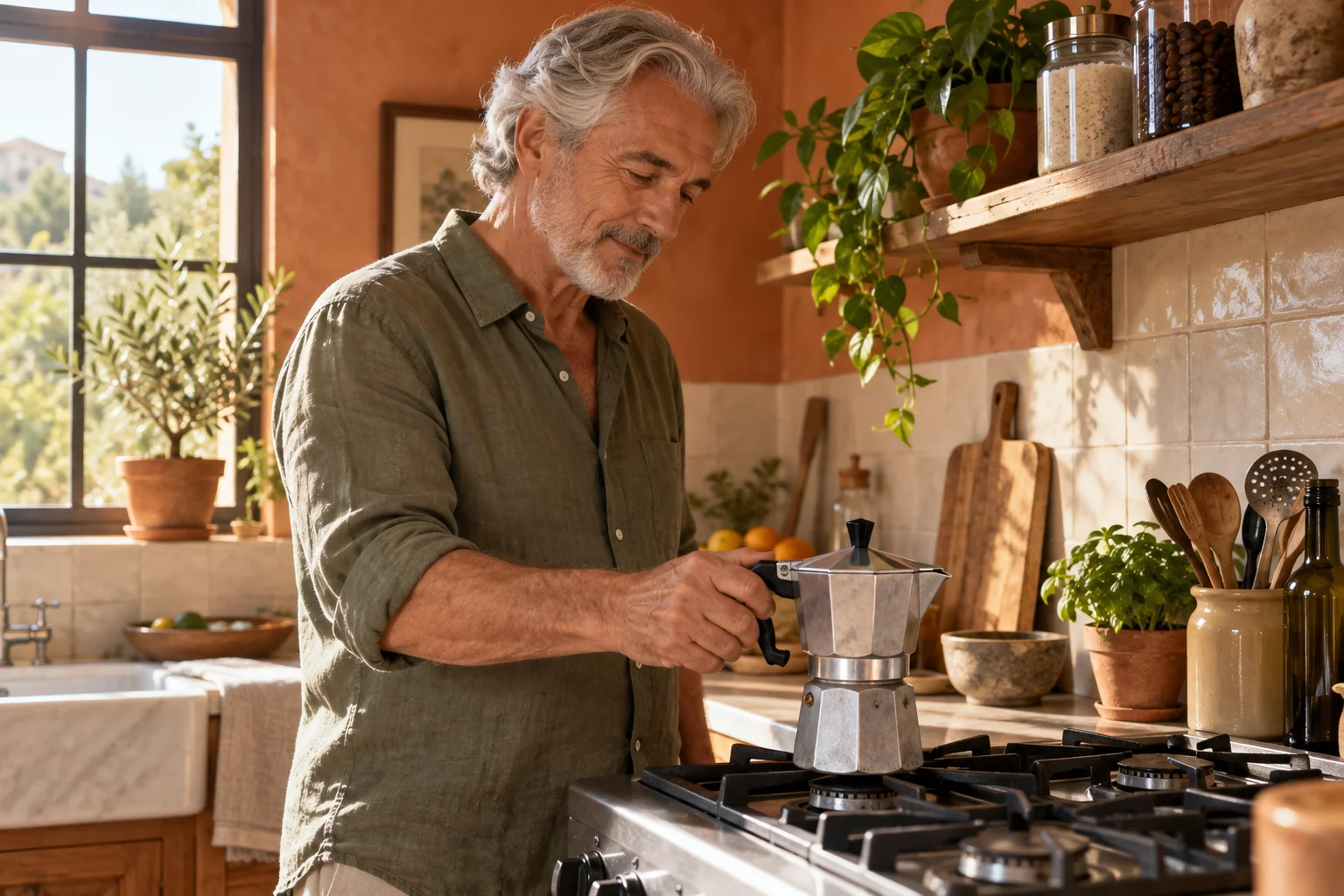
Give moka coffee its own record
Moka pot coffee is a concentrated stovetop brew, but it is not an espresso shot made on a pump machine. Its equipment, pressure behavior, and preparation are different. Do not force it into espresso time and yield targets simply because the drink is small and intense.
Start by identifying the pot and its size. The basket and lower chamber define a practical batch, so follow the manufacturer’s filling guidance instead of treating the vessel as an unrestricted ratio calculator.
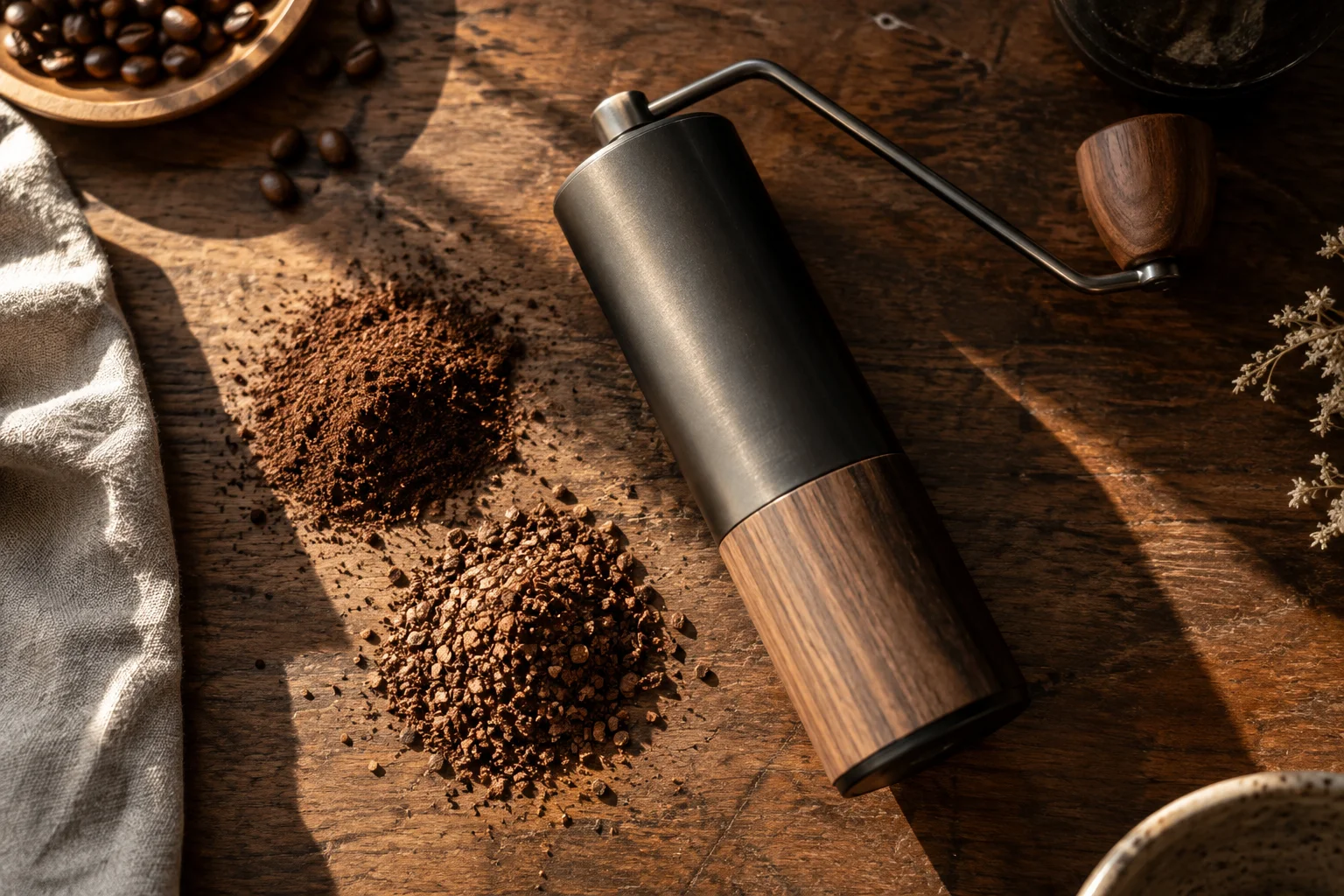
Record the beans and grind, then the actual coffee dose you used with the correctly filled basket. A journal can measure your routine without changing the routine into something the brewer was not designed to do.
Measure within the manufacturer’s instructions
Bialetti’s Moka Express guidance places water below the safety valve and instructs users not to tamp the coffee. Keep the valve clear, use the correct assembly, and follow the instructions for your particular model and stove. Do not pack the basket tightly to imitate espresso preparation.
Record your water-start condition and heat setting in terms meaningful for your stove. “Medium on the small burner” is often more repeatable at home than an invented temperature. If you weigh the correctly filled water chamber, that number describes your setup; it does not replace the required fill level.
Check the gasket, filter, and valve as part of ordinary care. A change in flow after maintenance is worth noting. If the brewer behaves abnormally, follow its troubleshooting guidance rather than increasing heat to force coffee through.
| Record | Why it helps |
|---|---|
| Pot model and size | Keeps the recipe tied to its intended capacity |
| Water fill | Below the safety valve, according to the manual |
| Coffee and grind | A level, untamped basket and its measured dose |
| Heat setting | A repeatable description of the stove |
| Flow and finish | When coffee appeared and when heating ended |
Follow the ritual.
Keep the details.
Bring structure to your coffee routine with BrewTrax method selection, recipe setup, brewing timers, and recorded steps.
Explore Guided Coffee Brewing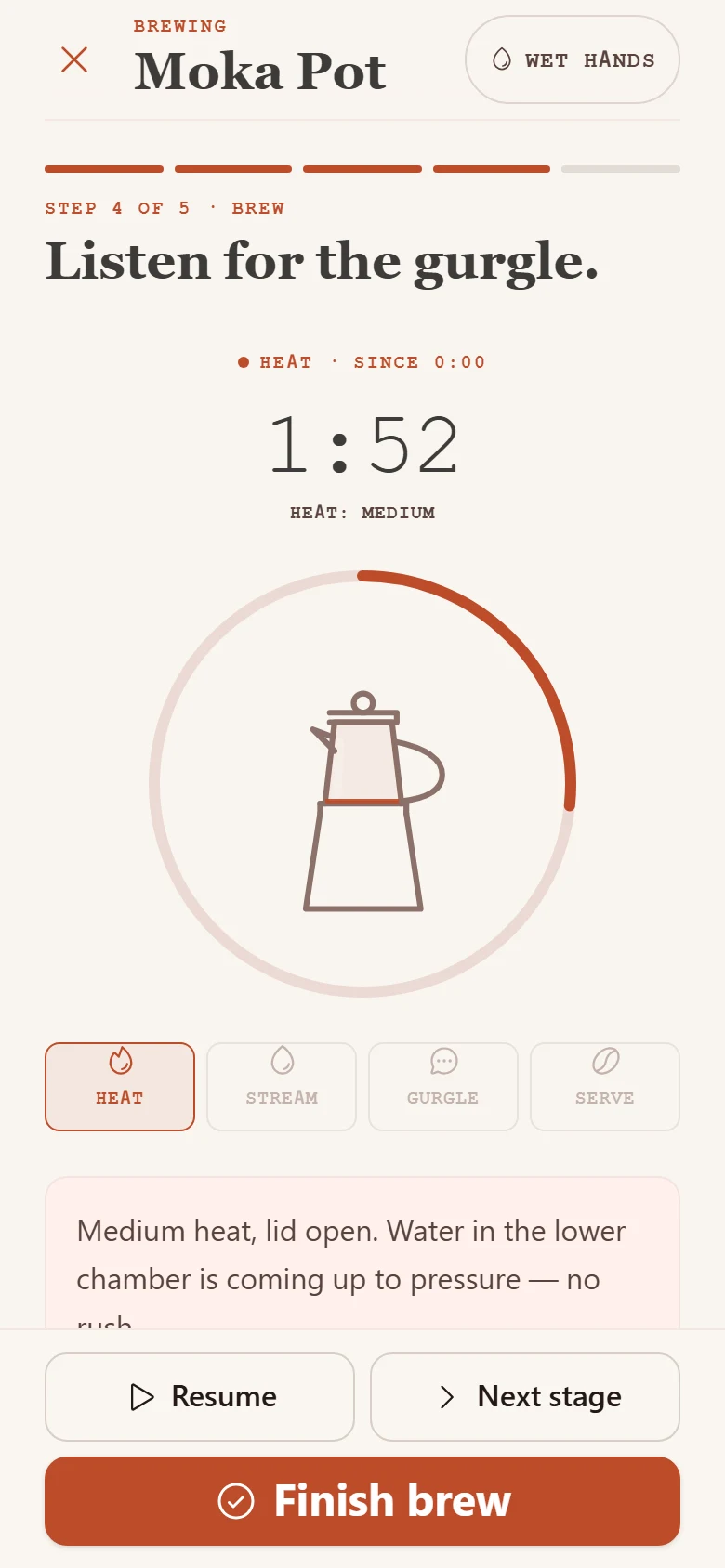
REMEMBER THE CUP.
Track the heat story
Record the time to first coffee and how the flow develops. A gentle, controlled flow and a sputtering finish are different events. Note when you remove the pot from heat according to the manufacturer’s instructions.
The total time alone can conceal differences in burner power, starting water, and pot temperature. A short process note often explains more: “same burner, lower heat; coffee appeared later and flowed more calmly.”
Avoid treating a dramatic sputter as the goal. The useful outcome is a cup you enjoy made with correct equipment handling. Keep hands away from hot metal and escaping steam, and let the brewer cool before opening it.
Judge the drink you actually serve
Taste a small amount at a comfortable temperature, then evaluate it as you normally drink it. If you add water or milk, record that serving choice. Concentrated black moka coffee and a large milk drink can favor different recipes.
When adjusting, keep the pot fill and safe preparation consistent. Explore a modest grind change or a different heat routine one at a time, and describe the flavor result. Do not pursue an espresso-style ratio by tamping or obstructing the brewer.
BrewTrax’s moka method gives this ritual its own place. Keep the equipment, heat notes, and tasting result attached to the same brew. A useful record respects what the brewer is and makes your next stovetop cup easier to repeat.