Find your
starting point.
Record grinder identity, settings, calibration, and taste so you can return to a useful grind without treating clicks as universal.
Pour a cup. Settle in.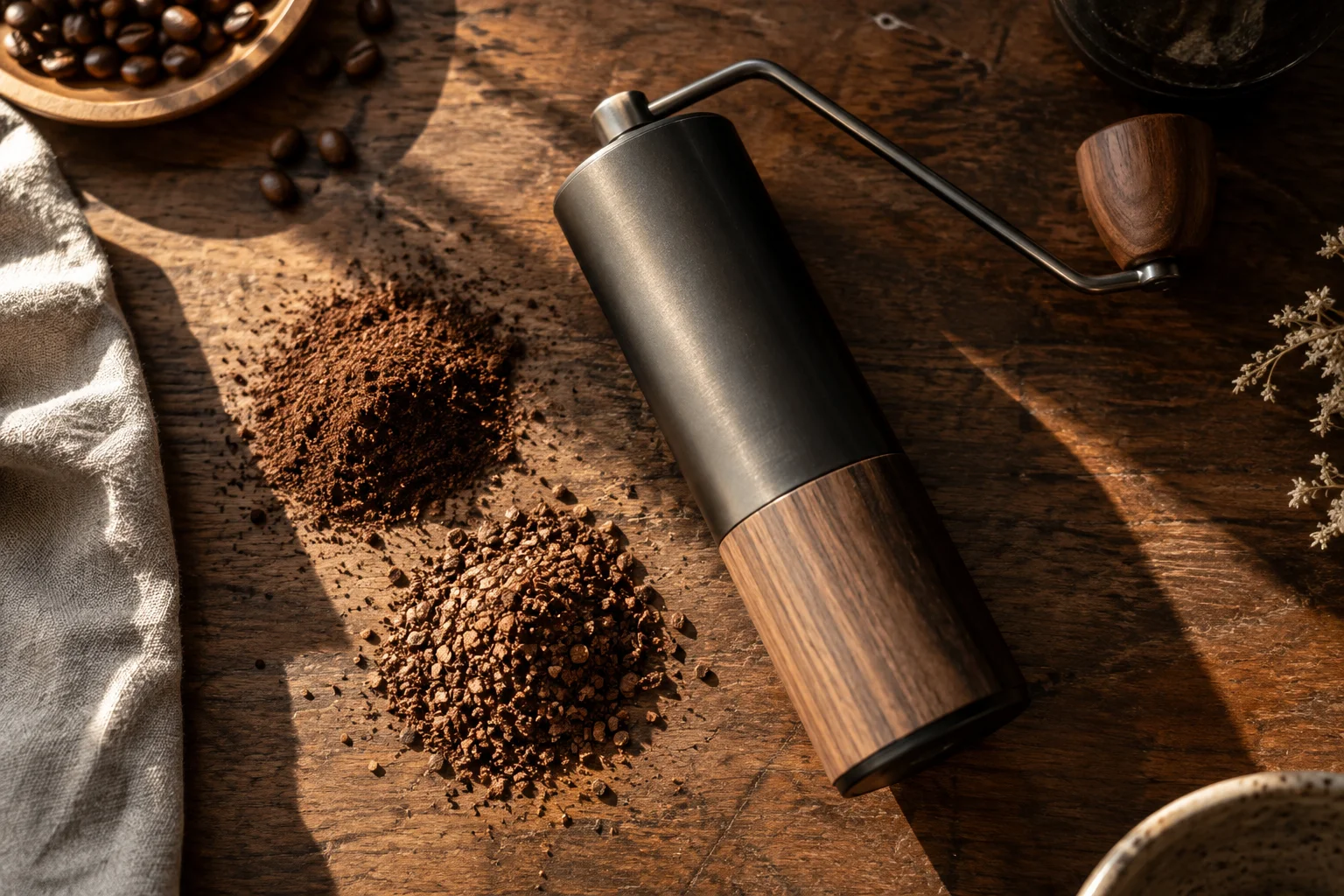
A number needs a grinder
“Twenty clicks” is not a complete grind setting. It needs a grinder name, a reference point, and sometimes a burr or calibration note. Two grinders with similar dials can produce different particle distributions at the same number. Even two units of the same model need not match perfectly.
Record the grinder you actually used, not just a generic label such as “medium.” If your grinder uses full rotations plus clicks, write both. If it has a numbered dial, preserve its markings rather than converting them into an imaginary universal scale.
This is especially useful when you alternate between espresso and filter coffee. A remembered “good setting” can belong to the wrong method or bag. Attach it to the complete brew so its meaning survives the weekend.
Define your reference carefully
Follow the manufacturer’s guidance for identifying zero or calibration. Do not force burrs together to create a reference point. Some grinders require the motor to be running for certain adjustments, and some discourage changing finer while loaded. Equipment instructions take priority over a recipe on the internet.
A practical entry might read “hand grinder, one full rotation plus twelve clicks from manufacturer reference.” You do not need this entire sentence every morning if the equipment record stores the context. You do need to note when the context changes.
After cleaning, burr replacement, or recalibration, mark the first few brews. If the old recipe suddenly flows differently, the change may be in the reference rather than the coffee.
| Record | Why it matters |
|---|---|
| Grinder and burr set | Identifies the equipment |
| Dial or click notation | Lets you return to the setting |
| Reference convention | Explains what zero means |
| Maintenance date | Marks a possible change in behavior |
Every brew.
A way back.
Track coffee recipes, beans, grind settings, brew steps, and tasting notes across your favorite methods with BrewTrax.
Explore Coffee Brew Tracking App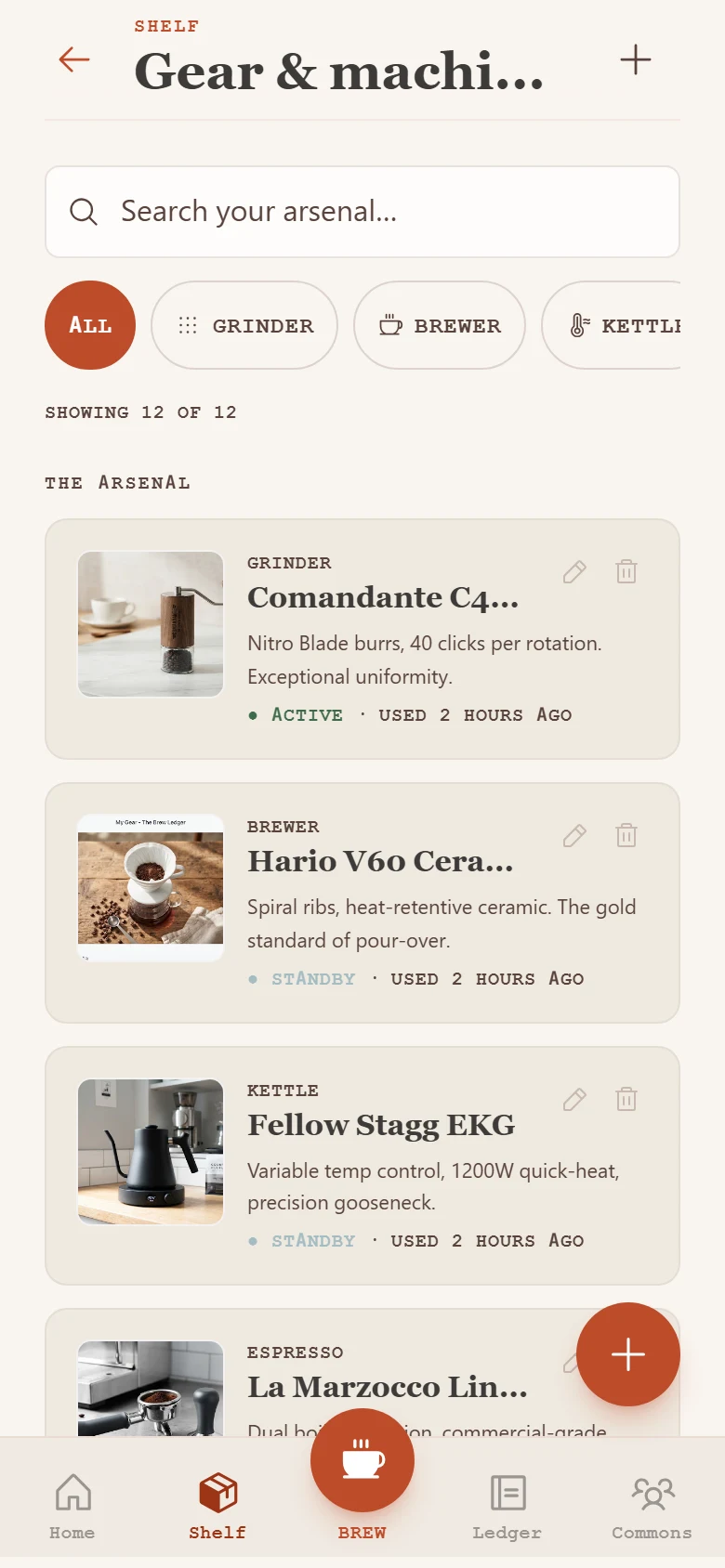
REMEMBER THE CUP.
Write the adjustment and the result
A useful grind log includes direction. Write “one small step finer than yesterday” alongside the new absolute setting. That makes your experiment understandable even if the scale is unfamiliar to someone reading the recipe.
Do not assume finer always means better. Finer particles can alter resistance, flow, and evenness. In pour-over, fines migration or agitation can slow the bed. In espresso, puck preparation and channeling complicate a simple grind-to-time relationship. Record what happened instead of forcing every result into a rule.
If you change grinders, treat the old setting as a description of intent rather than a conversion formula. Begin with the new manufacturer’s method guidance and dial in by taste. Save both equipment identities so later comparisons do not mix unlike brews.
Build a starting range for each coffee
After a few cups, your journal may reveal a range that works well for a particular bean, dose, and method. That range is more useful than declaring one setting permanently correct. Coffee age, batch size, and conditions can move the starting point.
In BrewTrax, keep gear and brew records connected. Before grinding, open the last successful entry for the same coffee and method. After brewing, add a short outcome: “slower drawdown, rounder sweetness, slight dryness.” The outcome tells you whether the adjustment was worthwhile.
If you are stuck, return to the last enjoyable brew instead of continuing to turn the dial in one direction. Repeating a known baseline can reveal whether an apparent trend was really a pouring difference or preparation mistake.
- Identify the grinder and its reference.
- Record the setting before brewing.
- Change one repeatable increment.
- Compare taste and flow.
- Save the preferred recipe with its equipment context.