A slower ritual.
A fuller record.
Log French press coffee dose, water, immersion, crust handling, plunging, and serving to make your preferred cup more repeatable.
Pour a cup. Settle in.
Start with your actual batch size
A French press is an immersion brewer: grounds remain in contact with the brewing water before the drink is separated for serving. The first useful measurements are coffee dose and water added. Measure the batch you actually make instead of relying only on a manufacturer’s cup count, which may describe smaller servings than your mug.
Name the press size and filter assembly, then record the grinder and setting. “Coarse” is a broad description; a specific equipment reference gives you a better starting point next time.
If you brew for two people on weekdays and a larger group at the weekend, save those as distinct batch recipes. A larger volume can change heat retention and serving behavior. Keeping the ratio alone does not document the whole experience.
Write down what happens before the plunge
Record when the timer starts, the water temperature, and the immersion time. Note whether you stir after adding water, leave the crust undisturbed, or break it later. These choices influence how the grounds interact with the water and how much sediment you disturb.
Follow your brewer’s instructions for safe filling and use. Avoid overfilling, check the glass for damage, and use controlled pressure when plunging. If the filter resists, do not force it. The recipe should fit the equipment, not demand unsafe handling.
Your journal does not need to declare one French press technique the winner. It needs to describe the technique you used clearly enough that you can repeat or change it deliberately.
| Record | Why it helps |
|---|---|
| Dose and water | The actual batch ratio |
| Temperature | Your initial brewing water |
| Immersion time | A defined wait before separating or serving |
| Stir or crust handling | The agitation you introduced |
| Plunge and pour | How and when you served the coffee |
Every brew.
A way back.
Track coffee recipes, beans, grind settings, brew steps, and tasting notes across your favorite methods with BrewTrax.
Explore Coffee Brew Tracking App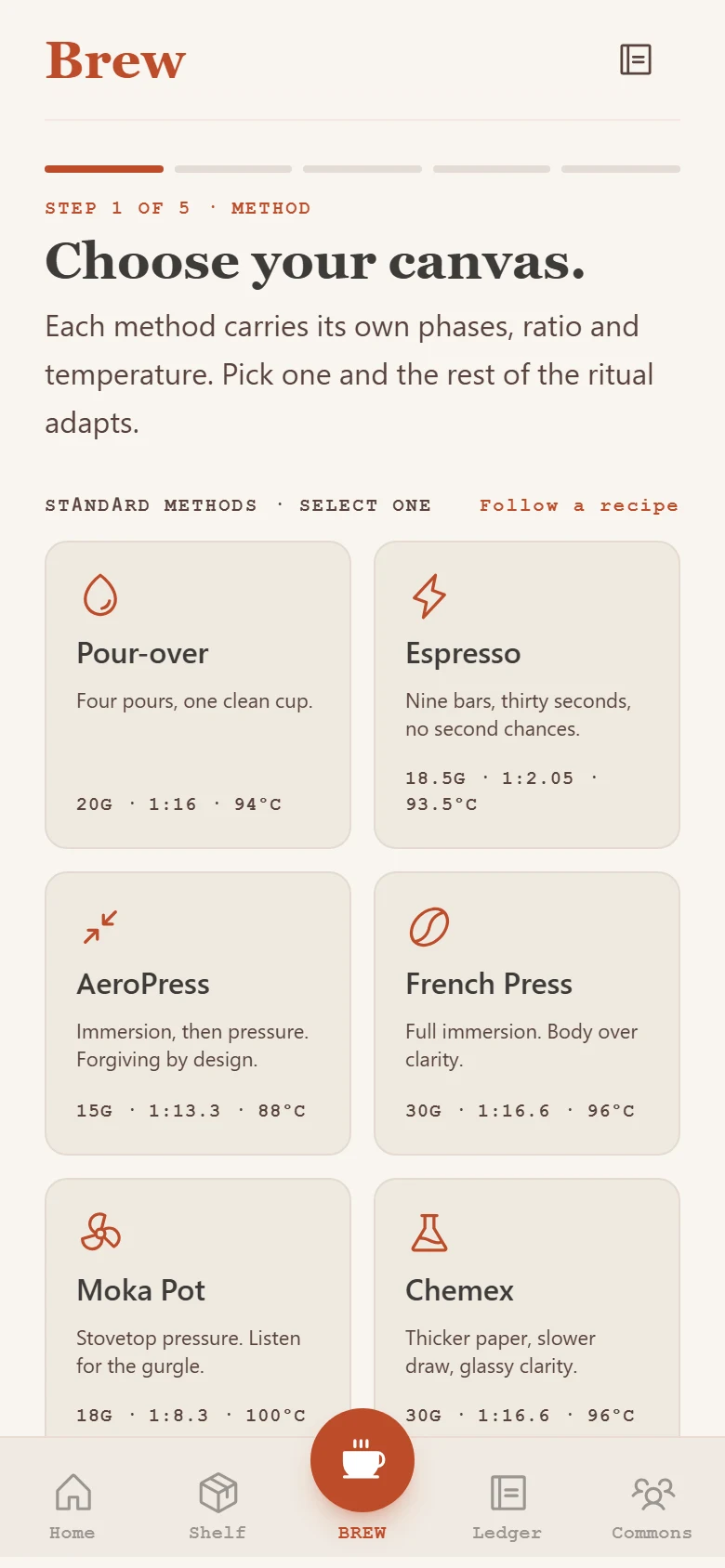
REMEMBER THE CUP.
The serving step belongs in the recipe
If coffee remains with the grounds after the first cup, later servings may differ. Record whether you decant the whole batch into another vessel or pour individual cups over time. This often explains why the second mug does not taste quite like the first.
Pour gently if you prefer less sediment, and note how much you leave behind. The press’s metal filtration produces a different texture from paper-filtered coffee. That texture is part of the method’s appeal for many people, not automatically a defect to remove.
When evaluating the brew, separate body from harshness. A full-bodied cup can still feel balanced. A gritty or drying finish may lead you to examine grind distribution, agitation, or serving technique rather than simply reducing coffee dose.
Choose one useful comparison
Try repeating the same recipe with a calmer serving routine before changing the grinder. Or hold serving and ratio steady while testing a different immersion time. Write what you expect to improve, then taste at a similar temperature.
BrewTrax keeps the recipe and your preference together. A short note such as “rich texture, sweet with milk, cleaner when decanted immediately” gives tomorrow’s brew a practical instruction.
If you already enjoy the cup, save it. Consistency is not a demand that every brew taste identical; it is the ability to return to the qualities you like and notice when a deliberate adjustment changes them.