Small cup.
Useful details.
Log espresso dose, beverage yield, grind, shot timing, preparation, and taste to dial in a new coffee with fewer guesses.
Pour a cup. Settle in.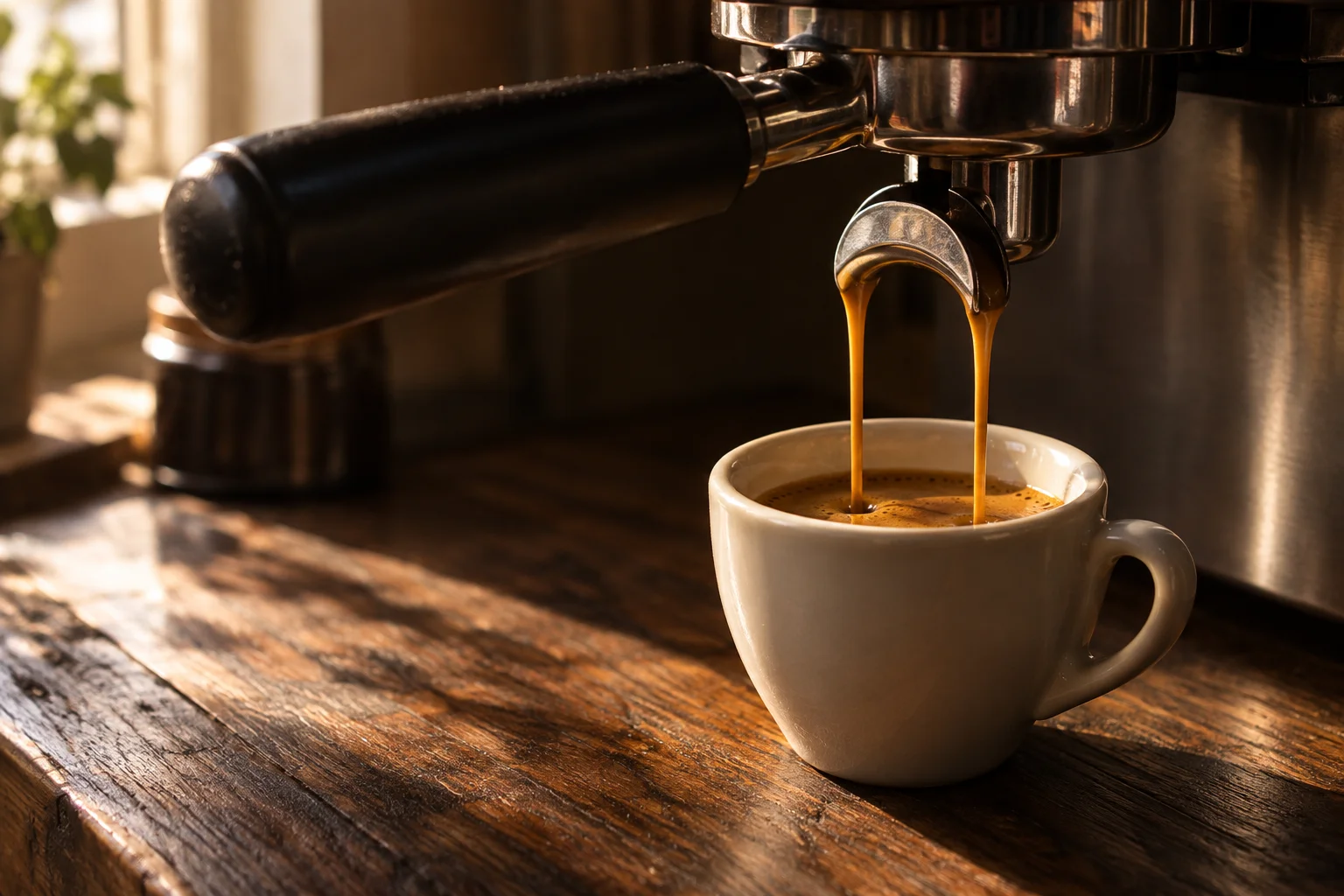
Dose in. Beverage out.
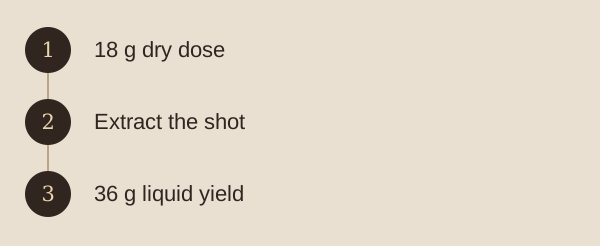
An espresso record starts with dry coffee dose and liquid beverage yield. If 18 g of coffee produces 36 g in the cup, the shot has a 1:2 dose-to-yield ratio. The output is not the total water used by the machine. Keep this distinction clear when you also track filter coffee.
Write the basket and machine context alongside the grinder. Choose a dose suitable for your basket and leave it stable while making your first comparisons. Changing dose changes puck depth and can make the next shot harder to interpret.
A familiar ratio gives you a starting point, not a compulsory destination. Different coffees and preferences may lead you toward shorter or longer yields. Taste the espresso in the form you intend to drink it: straight, diluted, or with milk. Record additions separately.
Give shot time a reference point
State when the timer begins. Pump activation, the start of preinfusion, and the first drip are different events. If your machine displays a shot time, note what that display measures. A record saying “28 seconds” cannot be compared reliably with one timed from a different starting point.
Also note preinfusion or pressure settings when your machine allows you to control them. Do not fill the entry with settings your equipment does not expose. A simple, repeatable record is better than guessing values to imitate a professional recipe.
The scale reading at the stop button and the final yield after residual drips may differ. Use a consistent convention. If you overshoot, log the actual yield rather than the intended one.
| Record | Why it helps |
|---|---|
| Dose | Dry coffee in the basket |
| Yield | Liquid espresso in the cup |
| Time convention | Pump start, first drip, or machine display |
| Grinder setting | Equipment identity plus its dial or click value |
| Preparation note | Anything unusual about distribution, tamping, or flow |
| Taste | Balance, texture, finish, and intended drink |
Every brew.
A way back.
Track coffee recipes, beans, grind settings, brew steps, and tasting notes across your favorite methods with BrewTrax.
Explore Coffee Brew Tracking App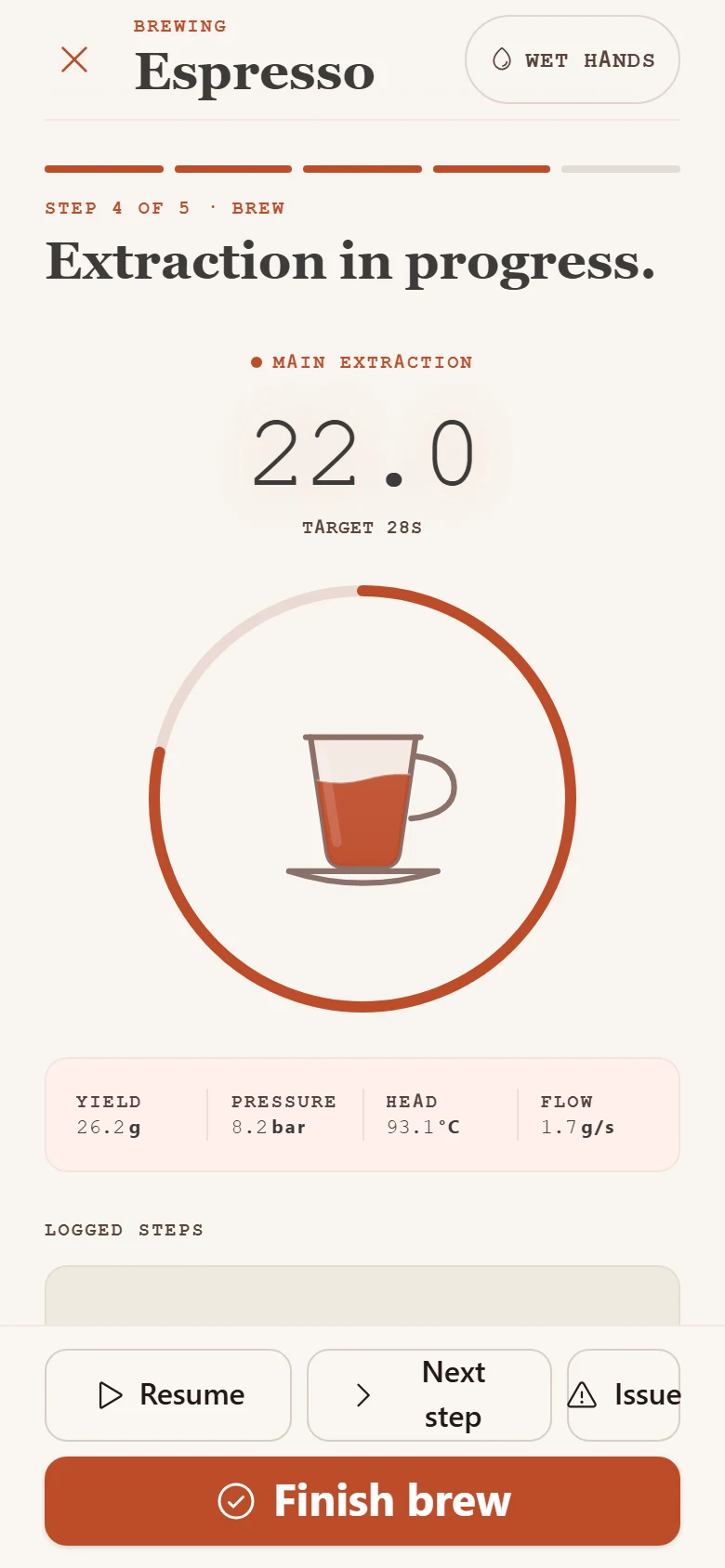
REMEMBER THE CUP.
Do not let the stopwatch taste for you
A shot running faster than expected can be a clue, but it does not automatically tell you which variable to change. Grind, dose, puck preparation, and the coffee itself influence flow. Uneven extraction can complicate a simple “finer equals better” explanation.
Describe the cup first. Does it feel thin, sharply acidic, harsh, drying, or pleasantly intense? Barista Hustle’s Espresso Compass separates strength and extraction as useful dimensions. That helps you avoid treating every strong-tasting shot as over-extracted.
If a shot shows obvious preparation problems, consider repeating the same recipe with a more consistent routine before moving the grinder. Otherwise you may adjust a good recipe to compensate for a one-off mistake.
Make the next shot a clear test
Choose one adjustment you can describe. You might hold dose and grind steady while exploring a slightly different yield, or keep dose and target yield steady while changing the grind. Save the choice and the result.
Once you prefer a shot, repeat it. A recipe worth keeping should be something you can return to, not just one beautiful extraction. If the bag changes over time, record roast age and opening date rather than assuming yesterday’s grind must remain correct.
In BrewTrax, keep espresso in the same ledger as your other brewing methods while retaining its dose-to-yield language. Add a brief tasting note, and save the recipe that works for your actual morning drink. The point is a better cup with less guesswork, not a perfect-looking timer.