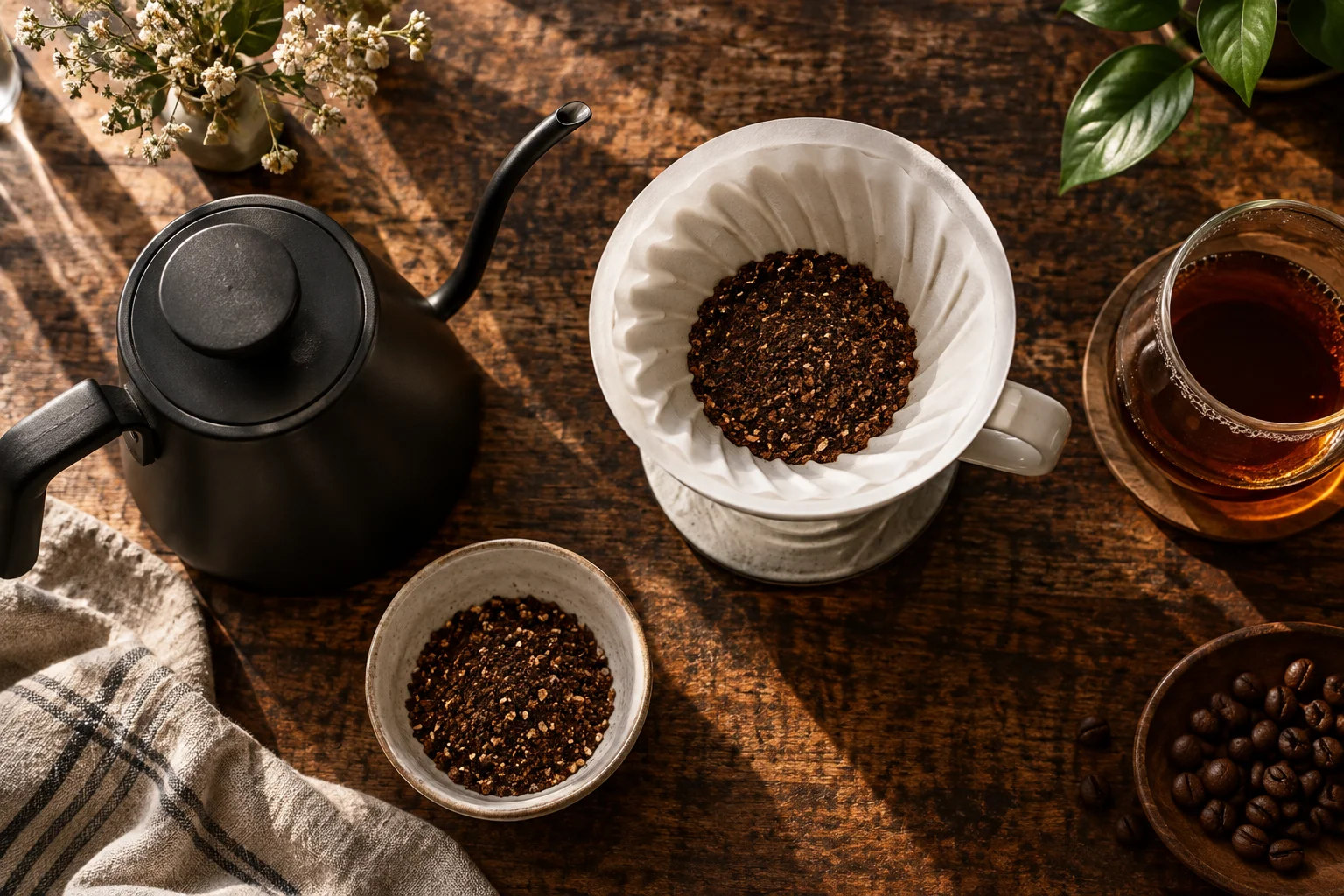
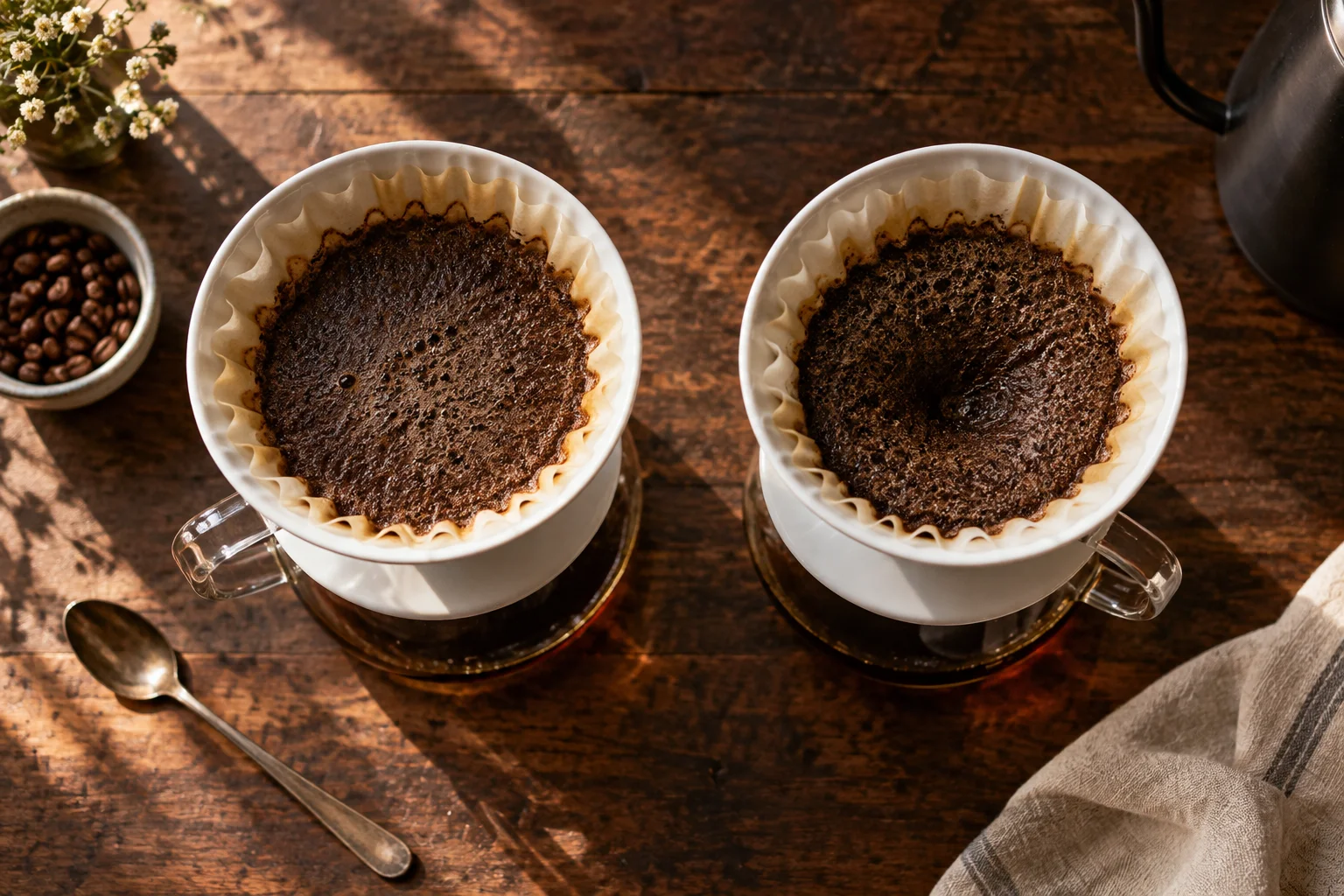
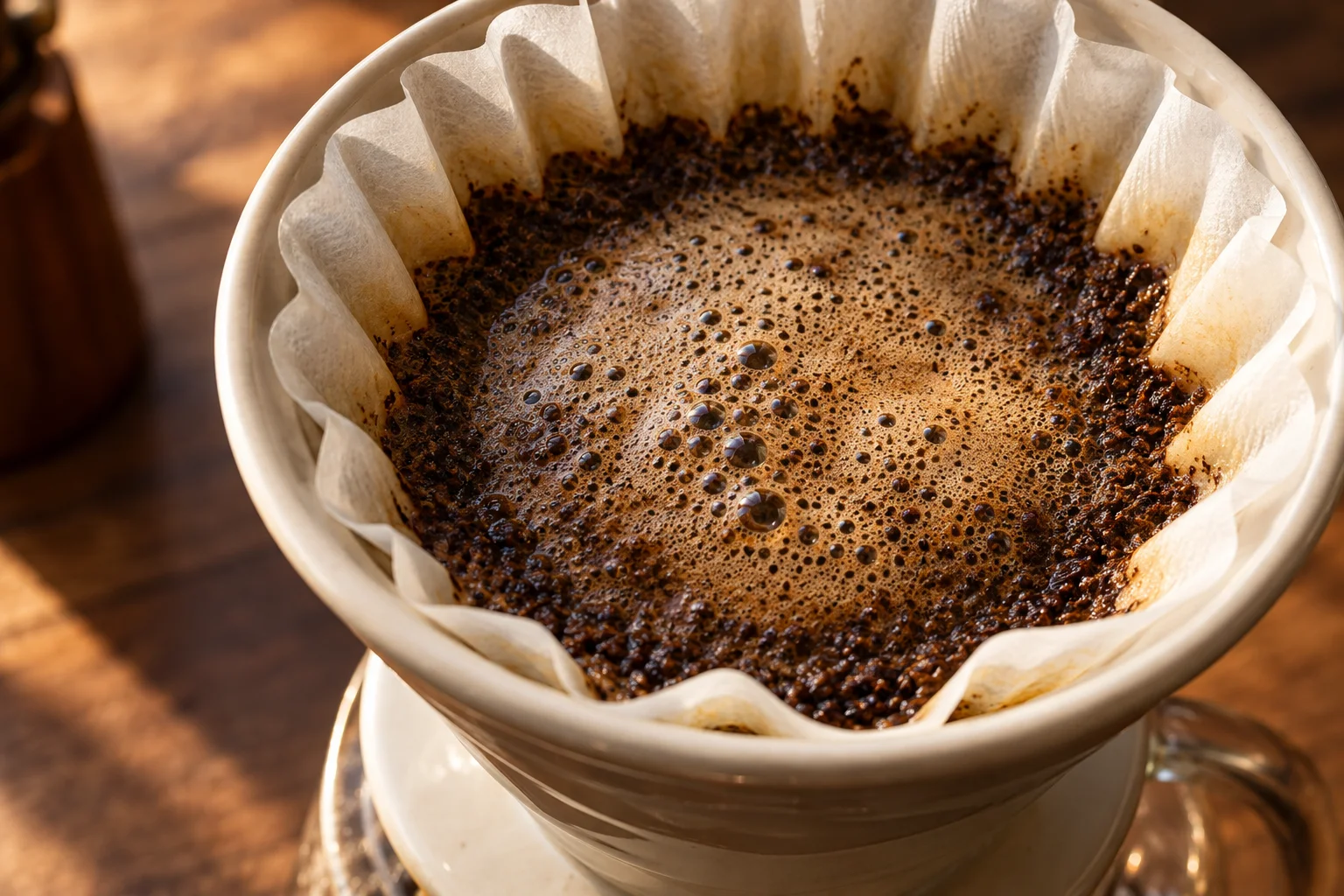
Ten small pours.
A new rhythm.
Explore Tetsu Kasuya’s 2026 THE NEO BREW: 20 g coffee, 300 g water, and ten 30 g pours at 15-second intervals.
Pour a cup. Settle in.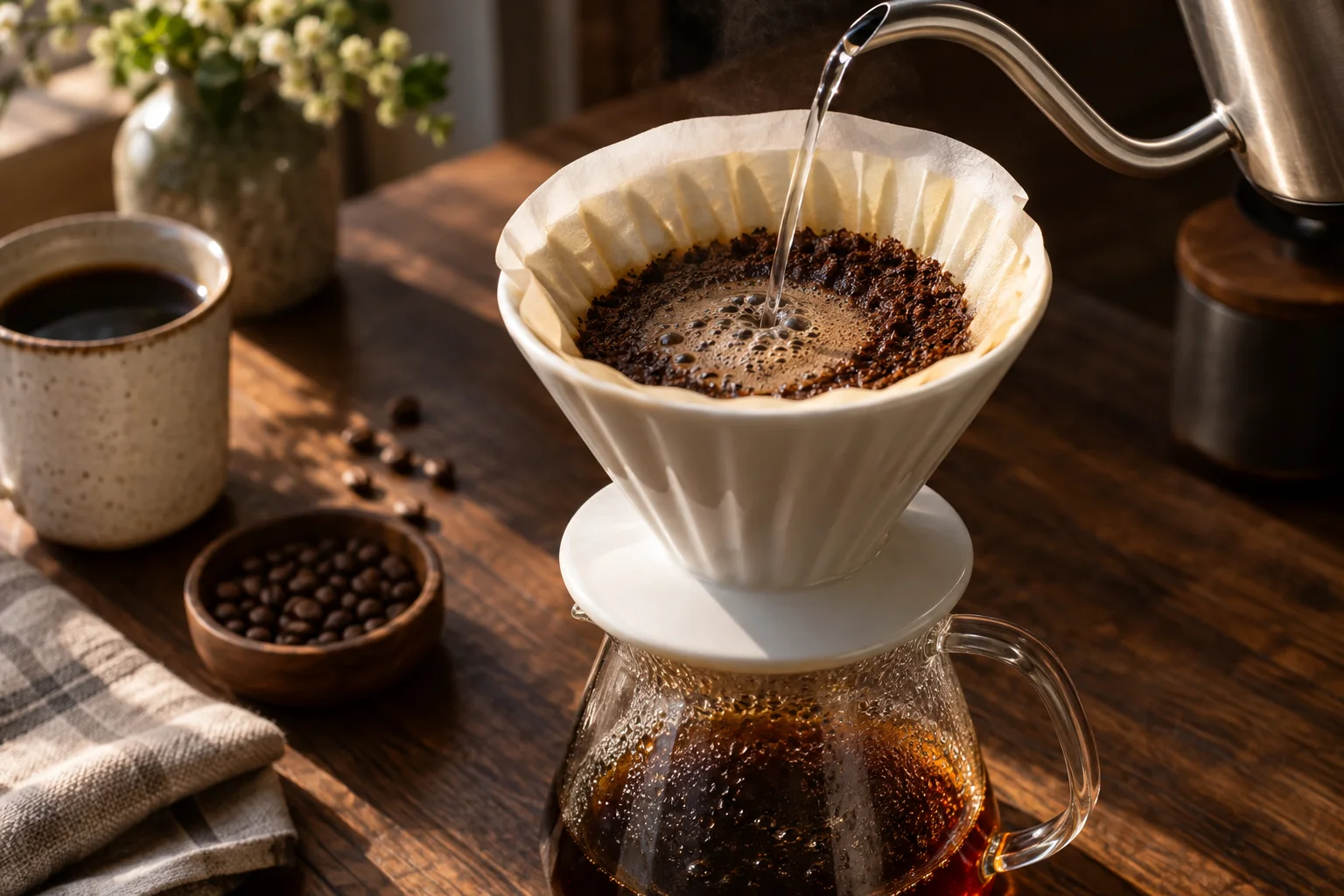
Go back to the original recipe
In his 2026 video, Tetsu Kasuya presents THE NEO BREW, a multi-pour approach built around an extremely coarse grind and ten small additions. The original video description specifies 20 g of coffee, 300 g of water, and ten 30 g pours at 15-second intervals.
It recommends light-roasted coffee, water at 95–96°C, and a HARIO NEO dripper, while noting that a V60 can also be used. The listed Comandante C40 reference is 40–45 clicks. That setting belongs to the named grinder and its convention; it is not a transferable number for other grinders.
This is a distinct recipe to explore, not evidence that older methods are obsolete. Kasuya’s descriptions of the cup are his tasting impressions. Your coffee and equipment may produce a different balance, which is exactly why a good brew log is useful.
Ten additions, clearly numbered
The timeline below follows the original description’s 15-second spacing. It does not insert a separate 30-second first bloom. Start with the first water contact at zero, then add 30 g at each listed start time.
Use cumulative scale readings to reduce mental arithmetic while pouring. The tenth addition begins at 2:15; that is not the final brew time. Record the actual drawdown after the last pour.
| Pour | Start | Add | Scale total |
|---|---|---|---|
| 1 | 0:00 | 30 g | 30 g |
| 2 | 0:15 | 30 g | 60 g |
| 3 | 0:30 | 30 g | 90 g |
| 4 | 0:45 | 30 g | 120 g |
| 5 | 1:00 | 30 g | 150 g |
| 6 | 1:15 | 30 g | 180 g |
| 7 | 1:30 | 30 g | 210 g |
| 8 | 1:45 | 30 g | 240 g |
| 9 | 2:00 | 30 g | 270 g |
| 10 | 2:15 | 30 g | 300 g |
Follow the ritual.
Keep the details.
Bring structure to your coffee routine with BrewTrax method selection, recipe setup, brewing timers, and recorded steps.
Explore Guided Coffee Brewing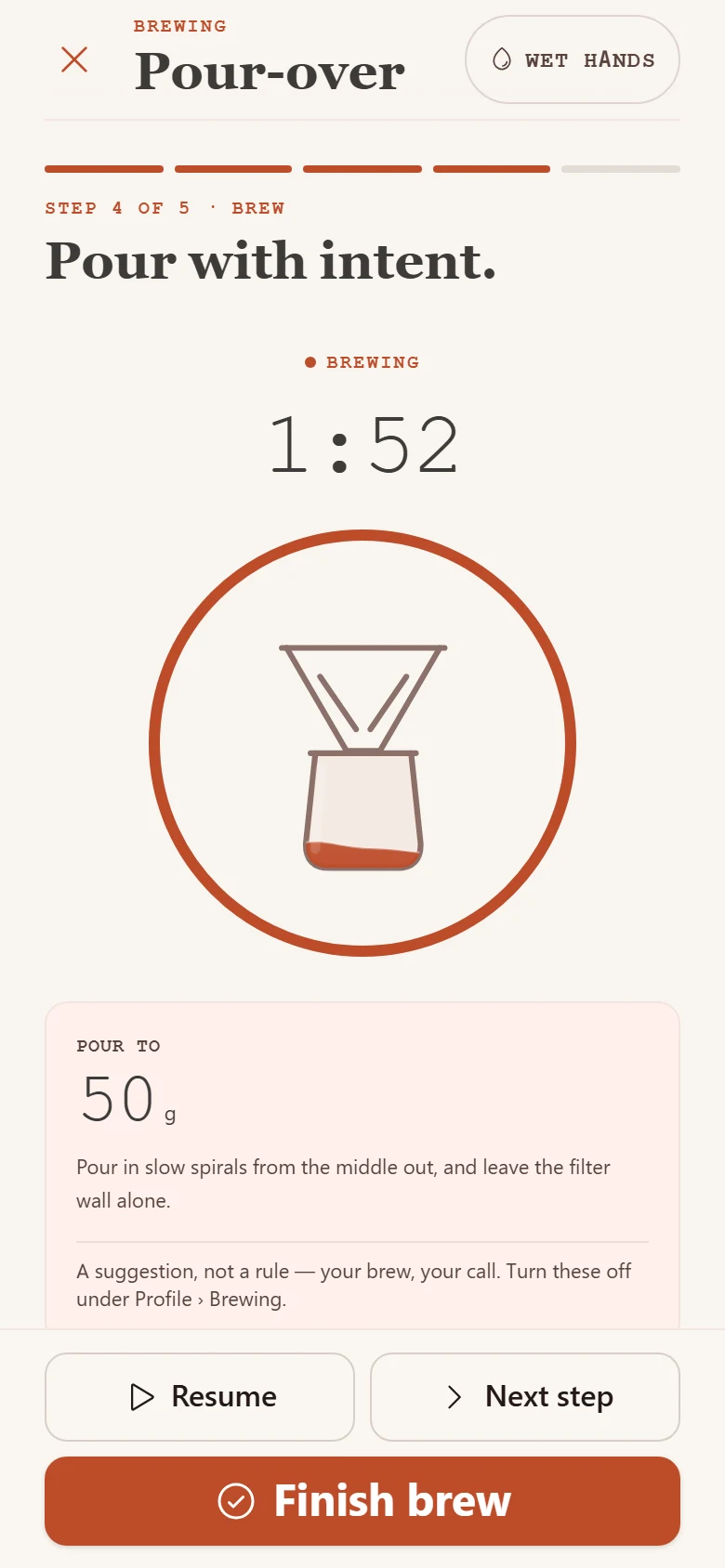
REMEMBER THE CUP.
The flow is part of the idea
The original description emphasizes drainage through the bed rather than maintaining a deep pool. This is one reason the coarse-grind reference matters. Keeping a familiar fine grind while copying only the pour count can create a very different brew.
Watch the original demonstration beginning around 12:32 to understand the physical pouring. The parameter discussion begins around 3:25. A written schedule cannot fully convey stream shape, height, or how the bed behaves between additions.
Record your actual equipment, grind, temperature, and whether water remains above the bed at each pulse. If you use a V60 instead of the recommended dripper, name that adaptation. Do not quietly assume the two setups are identical.
Avoid inventing a target final time when the written source does not provide one. Your drawdown is valuable data: save it alongside the flavor outcome, then decide whether an adjustment is warranted.
Compare complete recipes honestly
To explore this method, brew it with one familiar coffee and taste it as it cools. Write about sweetness, texture, clarity, and finish before comparing it with your usual recipe. A side-by-side comparison is more useful when the cups are tasted at similar temperatures.
If your usual recipe uses a finer grind and fewer pours, you are comparing complete brewing approaches. You are not isolating the effect of ten pours alone. Keep that distinction in your notes, especially if you share the result.
BrewTrax’s individual step records make the ten additions easy to preserve. Save the source recipe and your adapted version separately, including the actual timings if you fall behind. The goal is not to win a stopwatch exercise. It is to learn whether this new rhythm makes a cup you want to brew again.