A gentle movement.
A meaningful detail.
Understand bloom and agitation choices, and learn to record swirls, stirs, kettle height, and wetting without overcomplicating your brew.
Pour a cup. Settle in.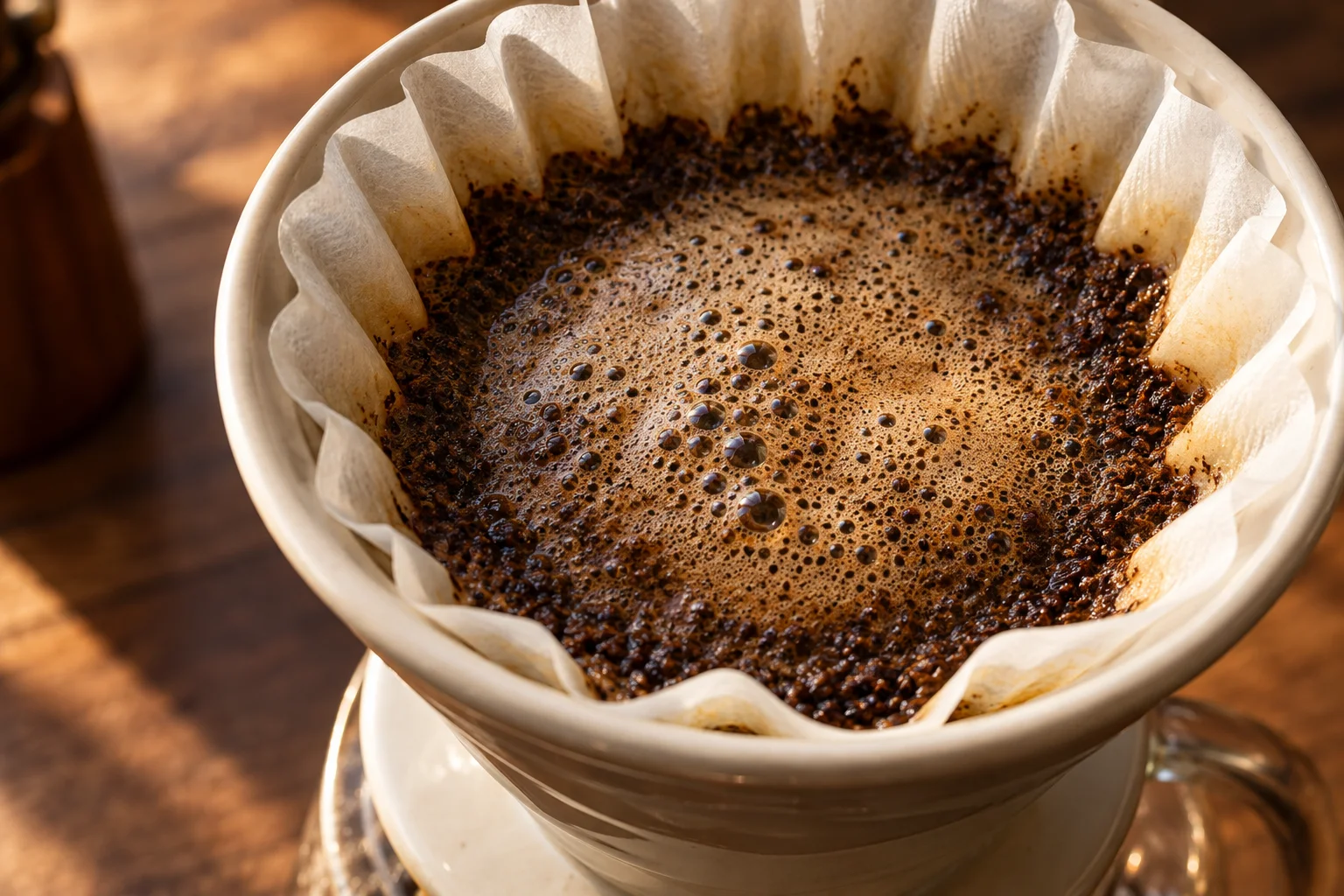
Start with wetting, not spectacle
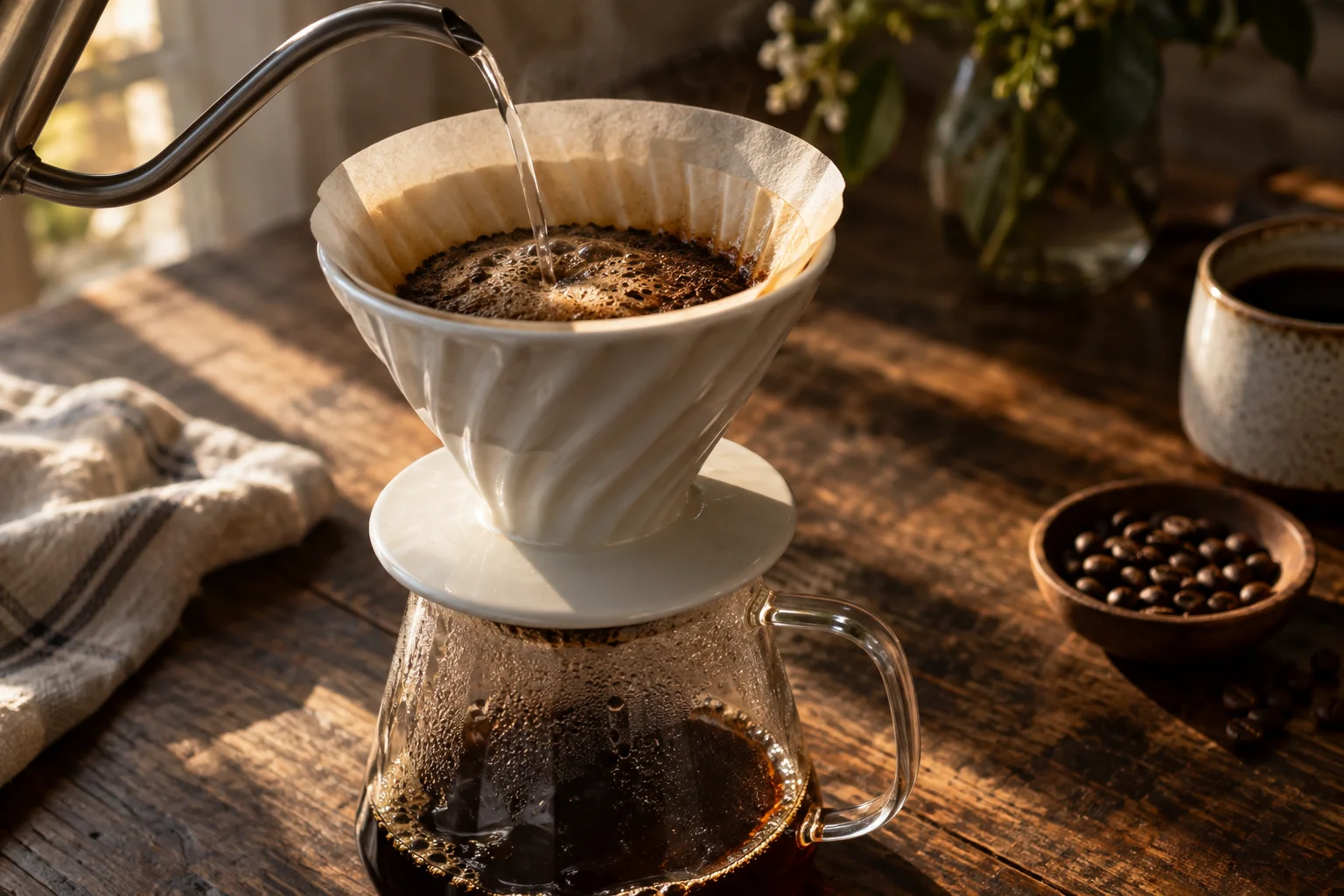
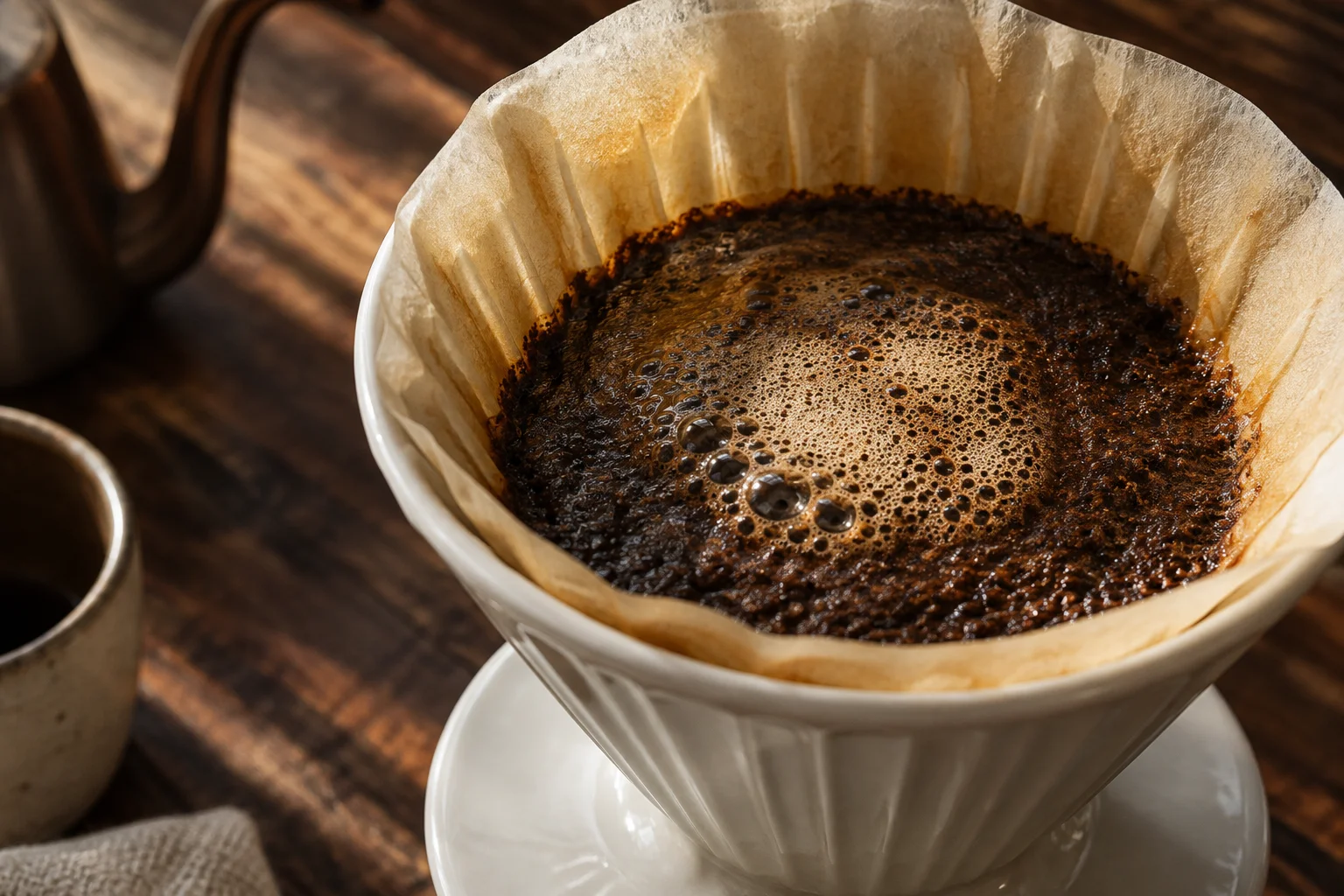
The bloom is the initial wetting stage in many pour-over recipes. Freshly roasted coffee releases gas, and the first addition helps wet the bed before the remaining water arrives. A large, dramatic bloom is not a quality score; roast, age, grind, and technique all influence what you see.
Record the bloom water and wait time. A 30-second wait and a 60-second wait are different recipe choices even if both entries say “bloom.” Start timing consistently and note whether the grounds were evenly wetted.
If dry pockets remain, your next experiment might focus on wetting technique rather than changing the overall ratio. The journal helps you make that specific choice.
Name the movement you made
Pouring itself agitates the bed. A high or fast stream can behave differently from a low, gentle one. Stirring and swirling introduce additional movement. These actions are not interchangeable, even when they all aim to distribute water more evenly.
Use descriptions you can repeat: “one gentle bloom swirl,” “two shallow spoon strokes,” or “steady low circles.” You do not need to measure every motion. You do need to distinguish a small settling swirl from a vigorous rotation that sends the slurry up the filter.
James Hoffmann’s one-cup technique and Lance Hedrick’s pour-over recipe describe different uses of agitation. Their recipes provide context for the movement; copying a stir from one into a different schedule creates an adaptation worth recording.
| Action | Useful note |
|---|---|
| Bloom | 50 g, wait until 0:45, even wetting |
| Swirl | One gentle rotation after the bloom |
| Stir | Tool, stage, and approximate number of strokes |
| Pouring | Low circles or center pour; steady or vigorous |
| Finish | No extra movement, or a named final swirl |
Follow the ritual.
Keep the details.
Bring structure to your coffee routine with BrewTrax method selection, recipe setup, brewing timers, and recorded steps.
Explore Guided Coffee Brewing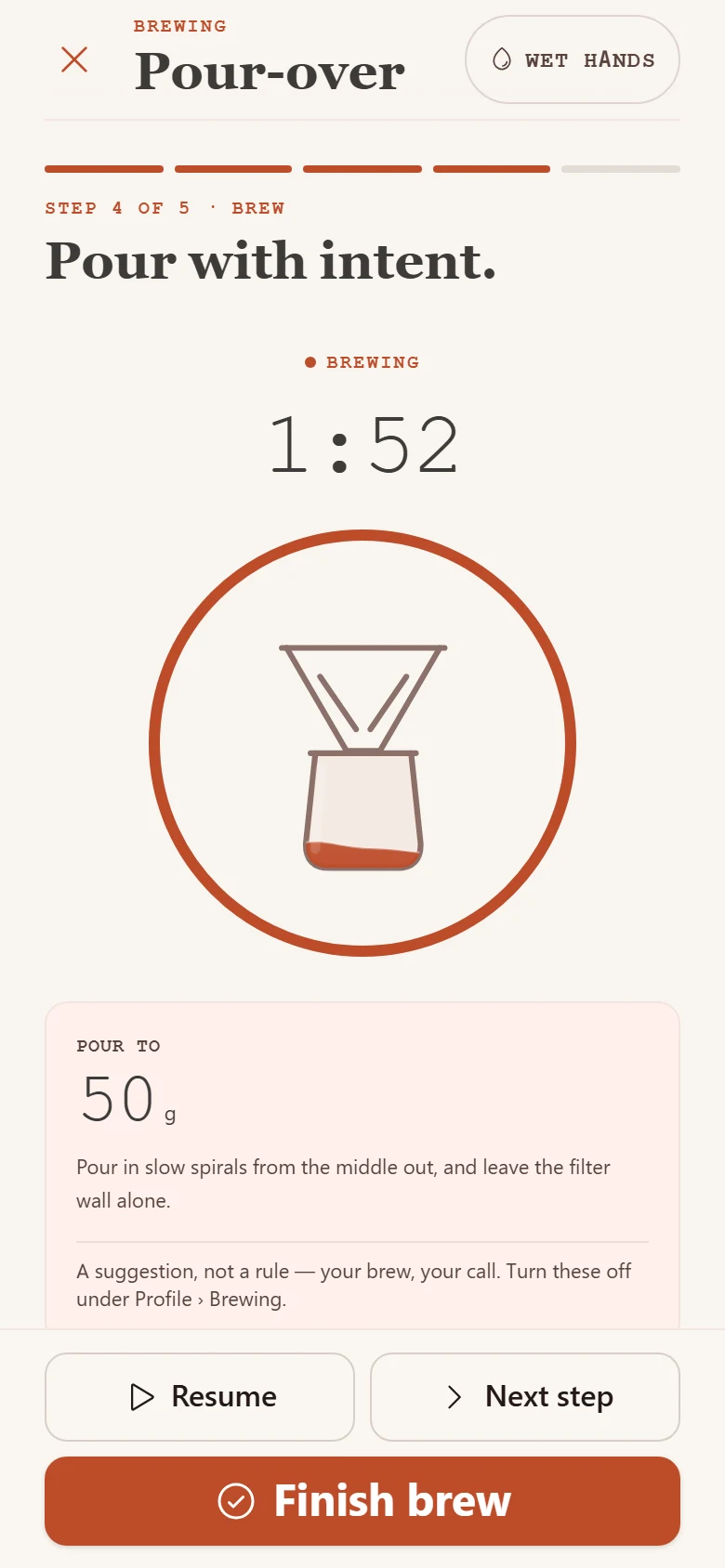
REMEMBER THE CUP.
Watch the consequences without assuming the cause
Agitation can improve contact between coffee and water, but it can also change particle movement and the resistance of the bed. A longer drawdown after a strong swirl is an observation worth keeping. It is not proof that every swirl is harmful.
The filter and grind distribution matter too. If a recipe stalls after you switch filters and increase agitation together, you cannot confidently assign the result to one change. Repeat a clearer comparison.
Taste the cup. A flow change might accompany a flavor you prefer, or it might produce a drying finish. Keep sensory language beside the process note so the stopwatch does not become the entire evaluation.
Try a calmer second brew
Use the same coffee, dose, water, grind, and pouring schedule. On the second brew, make only one deliberate agitation adjustment, such as a gentler final swirl. Record both the drawdown and the flavor.
Repeat the version you prefer. If you cannot reproduce the difference, simplify the routine further. A movement that is difficult to perform consistently may not be the best choice for your everyday brewing, even if a skilled demonstrator makes it look effortless.
In BrewTrax, attach the motion to the relevant step. “Swirl after bloom” belongs with the bloom record, not as an unexplained note at the bottom. That keeps the recipe readable when you return to it with a kettle in your hand.