When the flow slows.
Follow the clues.
Troubleshoot slow pour-over drawdown by checking the filter, grind, agitation, dose, and recipe before making a deliberate change.
Pour a cup. Settle in.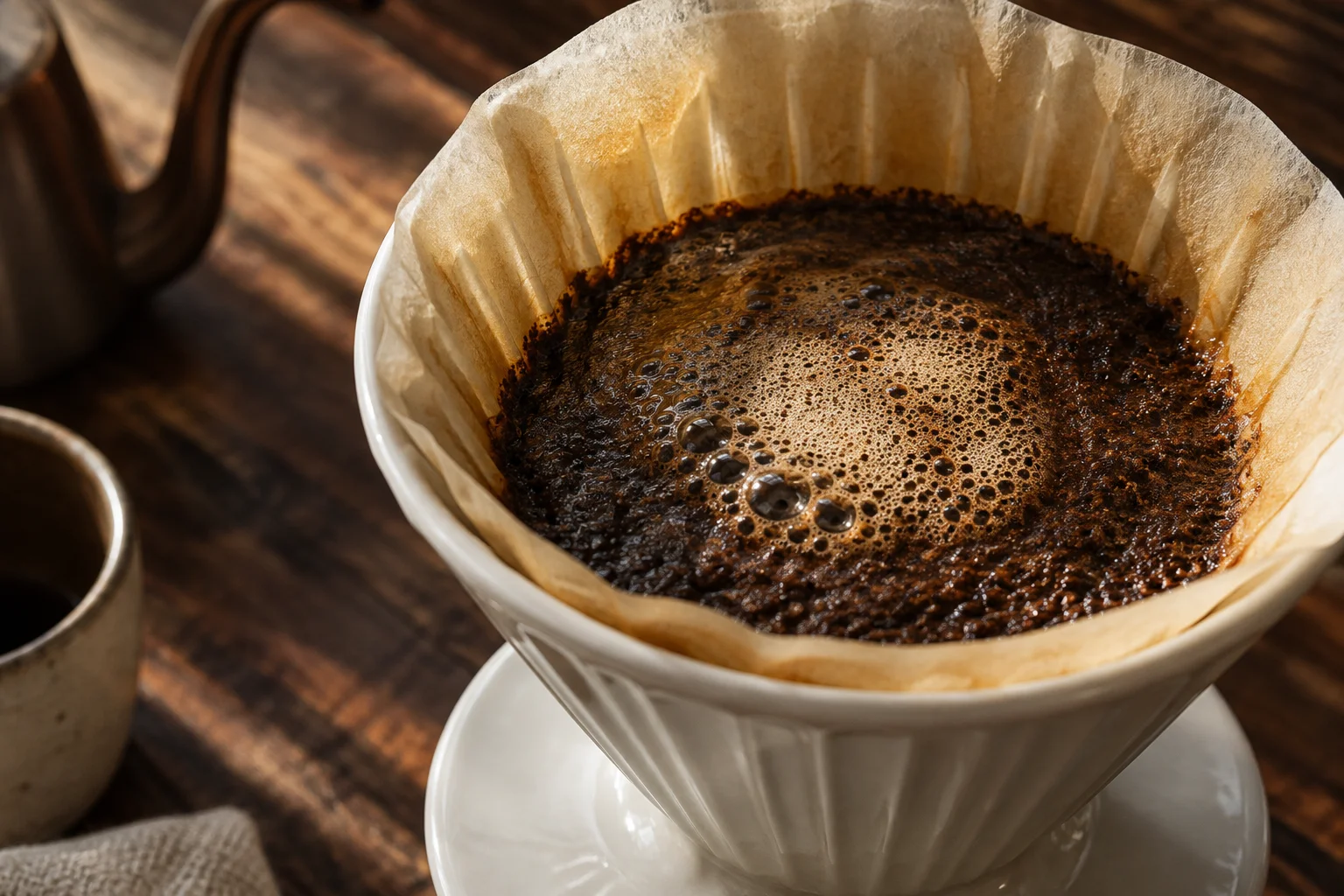
First, decide what changed
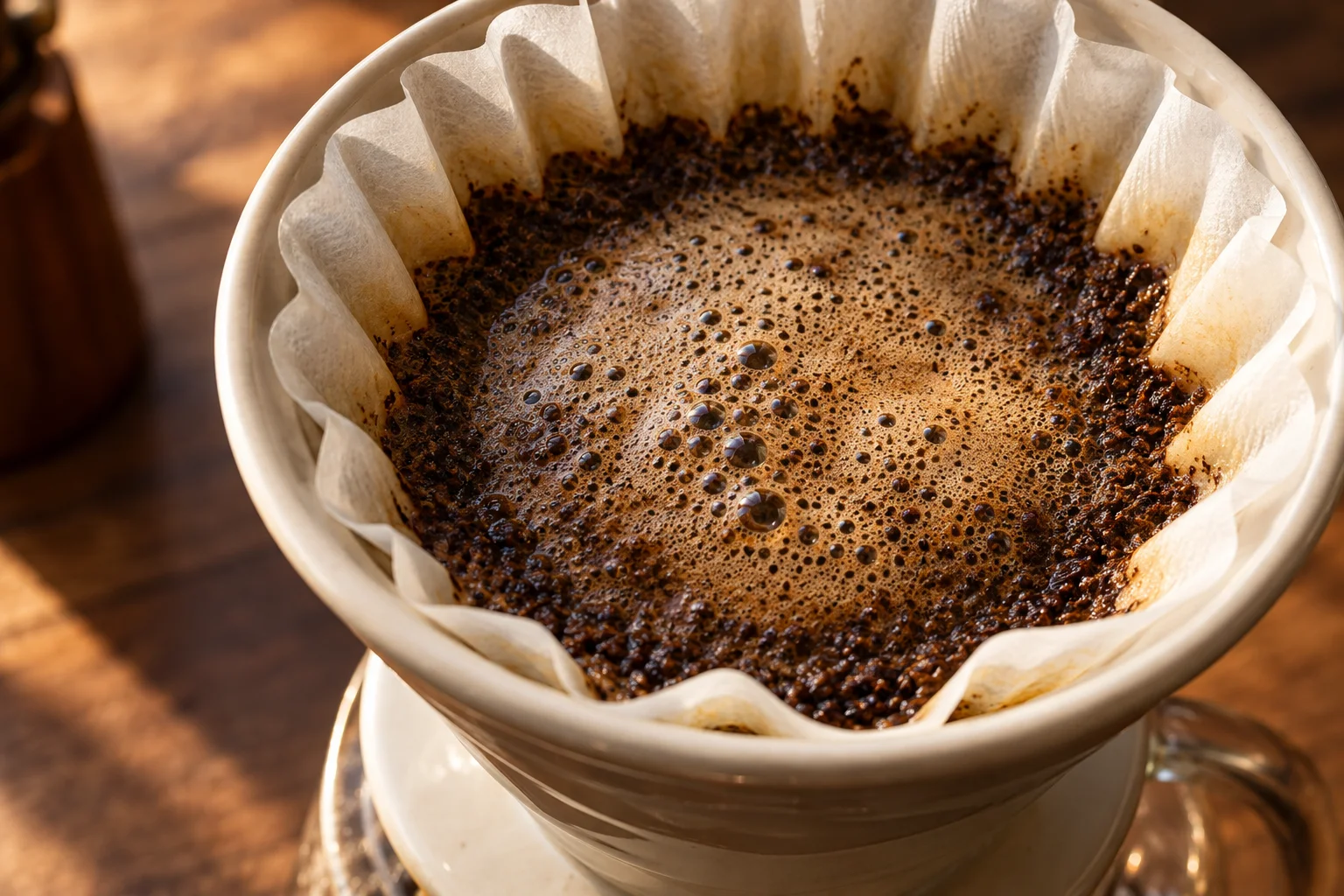
A pour-over that drains more slowly than your usual recipe deserves attention, but “slow” is relative to the setup. A larger dose, a different filter, or a new coffee can change the baseline. Compare the brew with a genuinely similar entry before calling it stalled.
Write down when the slowdown appeared. Was it slow from the first pour, or did the final drawdown change after a swirl? Did the water level rise unusually high? Did the filter sit differently? These details narrow the next test.
Taste the finished cup if it was brewed normally and is safe to drink. A long drawdown does not automatically mean an unpleasant result. The aim is to understand flow in relation to flavor, not to hit an arbitrary time.
Check setup before chasing the grinder
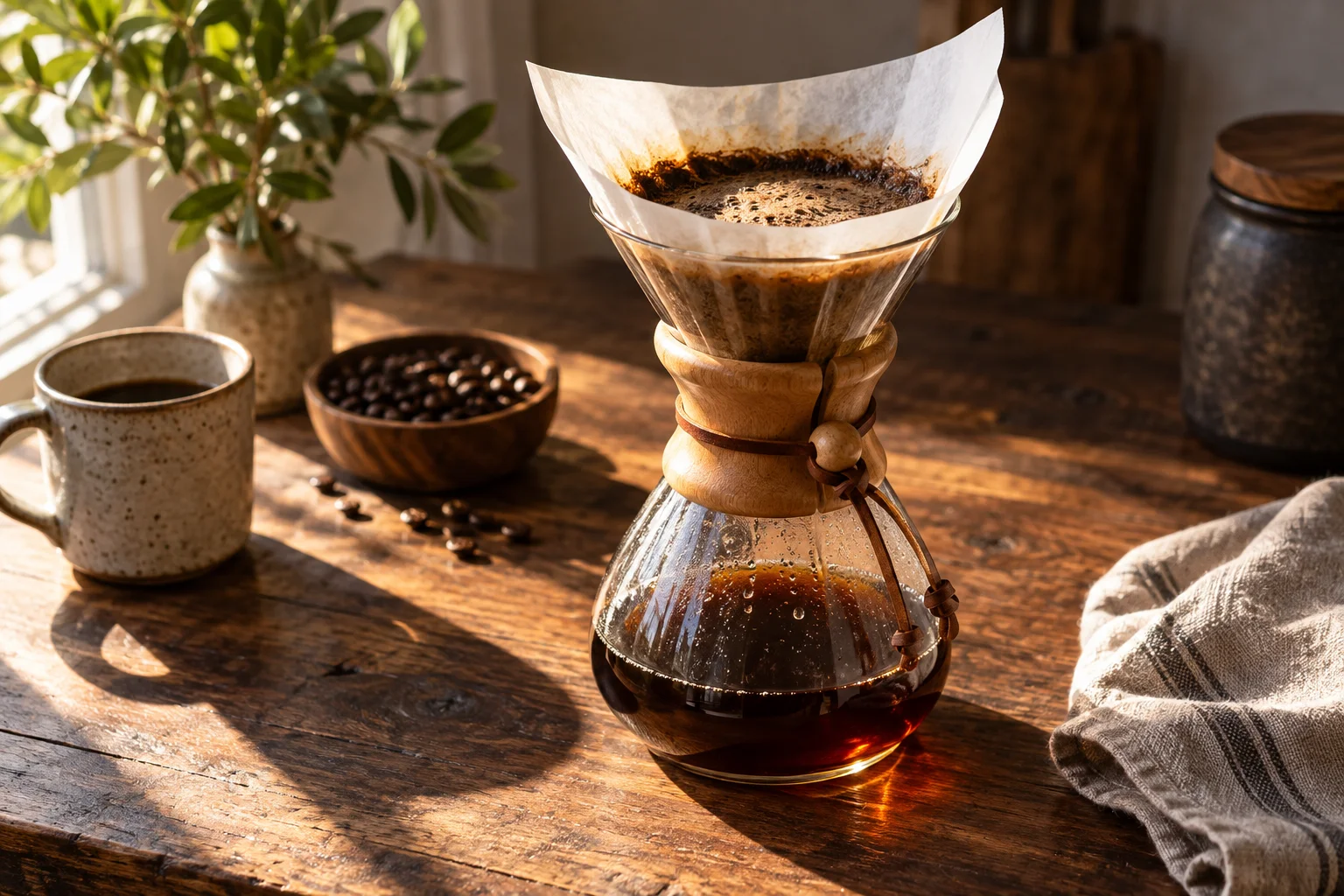
Confirm that the filter is the intended type and seated according to the brewer’s guidance. In a CHEMEX, keep the air path functioning as the manufacturer describes. A setup issue can resemble a grind issue.
Next, review the coffee dose and your batch size. More coffee can produce a deeper bed. Then review agitation: strong stirring, a vigorous swirl, or repeated forceful pours can move fines and alter drainage.
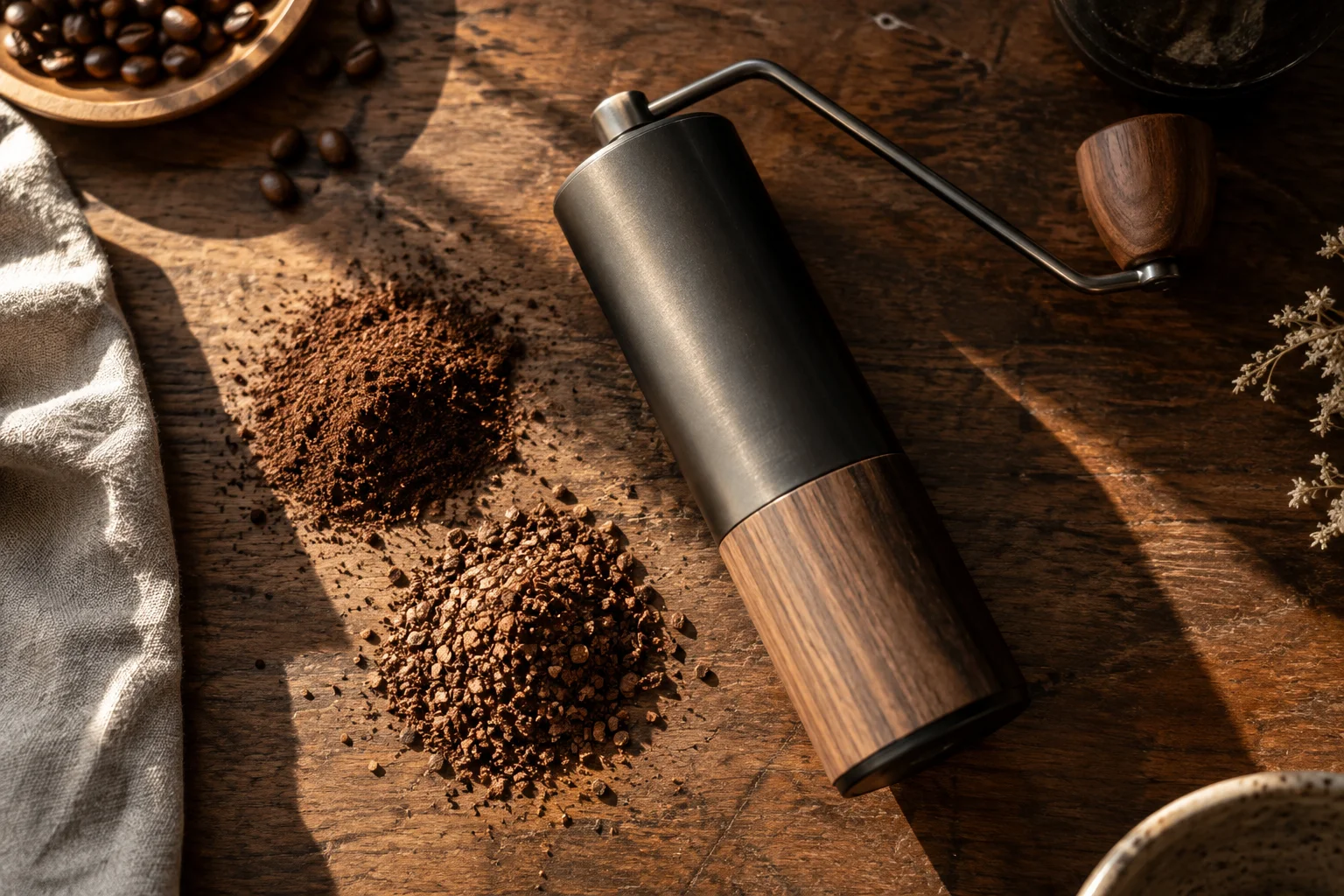
Finally, look at the grind. A small adjustment may help, but changing it before checking everything else can hide the original problem. Keep notes about a grinder cleaning, burr change, or recalibration too.
| Clue | Check next | Keep in the log |
|---|---|---|
| Slow from the first addition | Filter seating, dose, grind | Equipment and batch context |
| Slow after a strong swirl | Agitation and particle movement | Stage and strength of the swirl |
| Changed with a new filter | Filter type and fit | Exact filter identity |
| Changed with a larger batch | Bed depth and pour schedule | Dose, water, and timings |
Every brew.
A way back.
Track coffee recipes, beans, grind settings, brew steps, and tasting notes across your favorite methods with BrewTrax.
Explore Coffee Brew Tracking App
REMEMBER THE CUP.
Make the next brew a useful test
If the setup is correct, select one likely explanation. For example, repeat the recipe with a gentler final swirl while keeping grind steady. Or retain the pouring routine and make one small coarser adjustment. Do not do both at once if your goal is to identify the cause.
Log the actual drawdown endpoint consistently. If one timer stops when the water surface disappears and another runs until the last drip, the comparison exaggerates the difference.
Record flavor in plain terms: cleaner finish, less dryness, weaker body, or no meaningful change. A faster brew that tastes worse is not an improvement just because the timer looks tidier.
Return to a known good brew
If several changes have made the situation confusing, return to a saved recipe that worked with the same equipment. Use a familiar dose and a calm pouring routine. This can reveal whether the problem lies in the new coffee, a changed setup, or a series of compensating adjustments.
BrewTrax keeps previous attempts available beside your preferred records. A failed brew can be useful when it includes the one detail that explains what went wrong. Do not delete every disappointing entry just to make the history look successful.
Once you find a repeatable improvement, save the complete recipe. Include the filter and agitation notes so the same mystery does not return with the next bag.