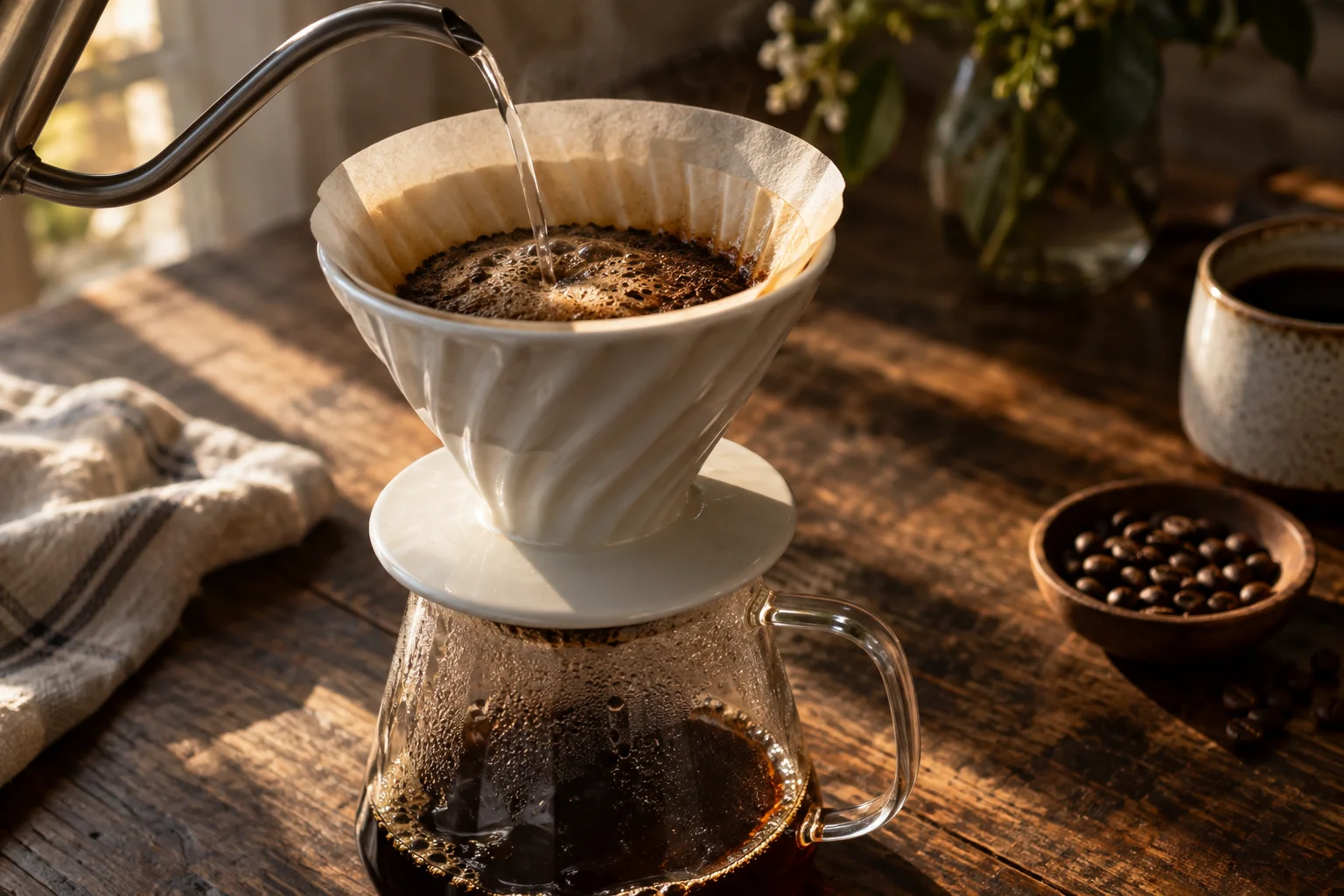
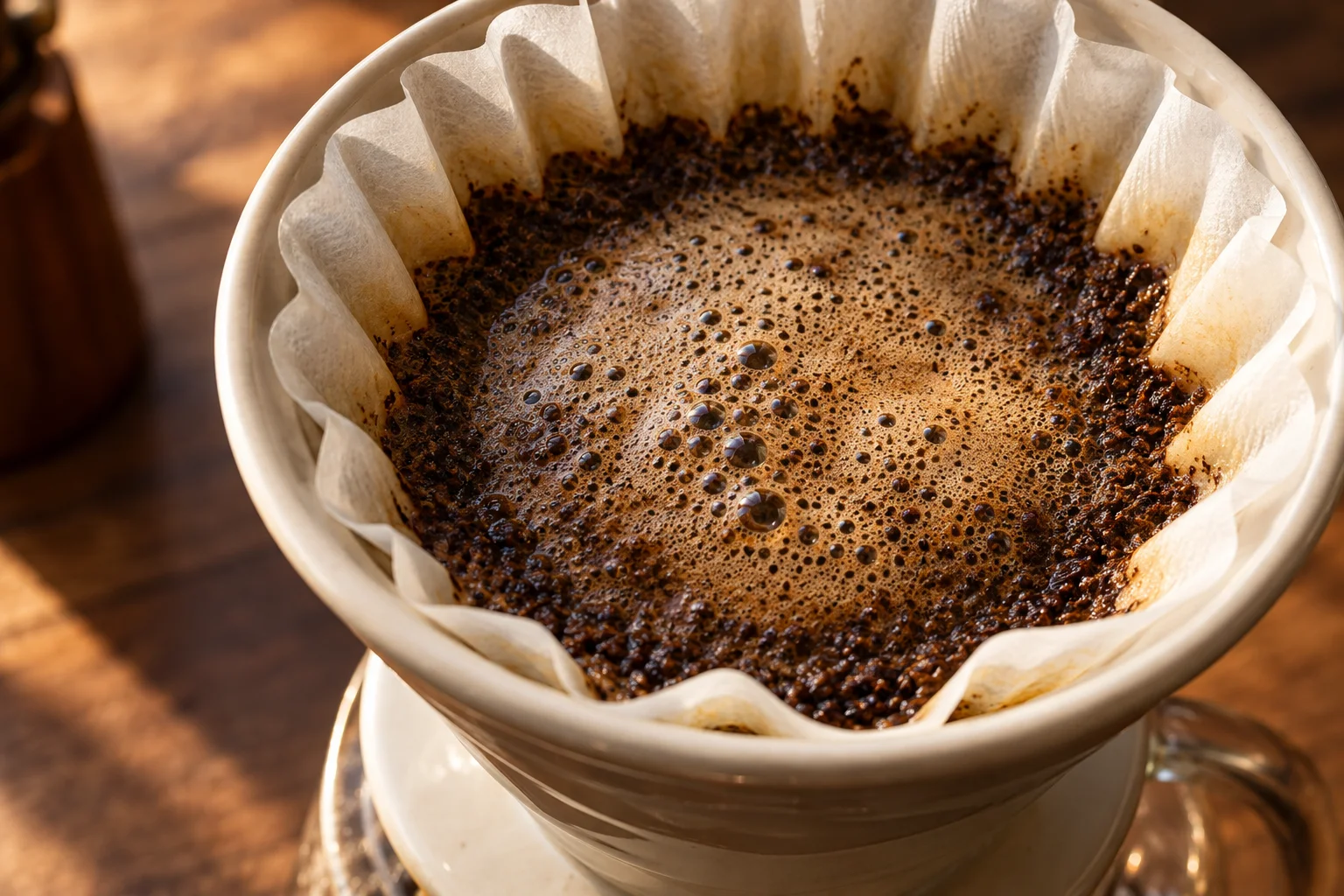
Watch the technique.
Keep the lesson.
A practical reading of James Hoffmann’s one-cup V60 guide: preserve the recipe, understand the technique, and record your own result.
Pour a cup. Settle in.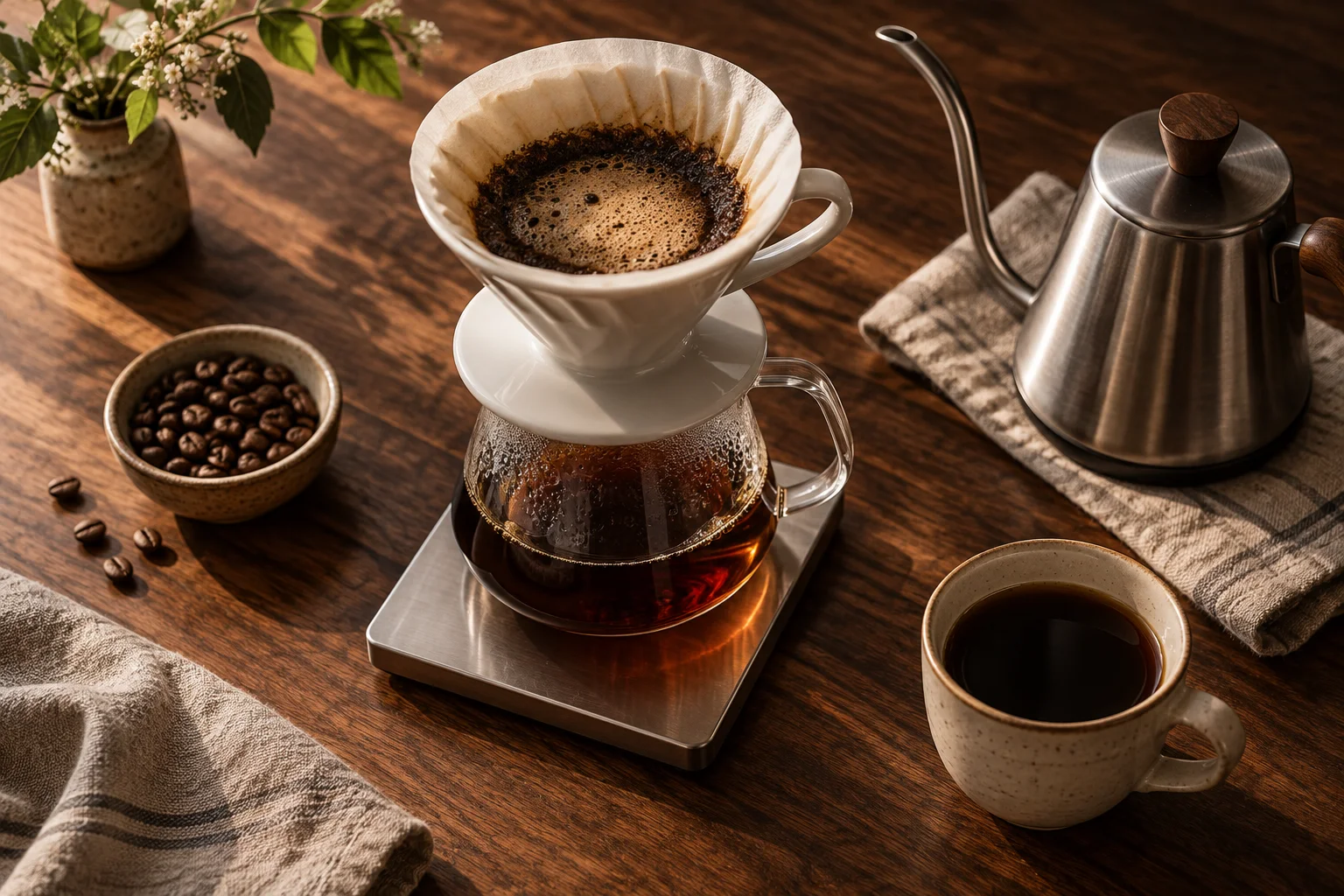
A good demonstration gives you something to repeat
James Hoffmann’s “A Better 1 Cup V60 Technique” is useful not only as a recipe but as an example of how clearly a brew can be described. The original video and its written description name the dose, water, grind direction, additions, pauses, and gentle swirls.
That level of detail gives a viewer a starting point and a way to notice adaptations. If you change the coffee, water, or grinder, you can preserve the rest of the method and record what happens. A recipe becomes a learning tool when its important decisions remain visible.
This article draws brewing lessons from that guide. The connection to journaling is our application of the method: write down the process, taste the cup, and use the record to decide what to do next.
The one-cup recipe as a reference
The original description uses 15 g of coffee and 250 g of soft, filtered water, with freshly boiled water suggested for lighter roasts and a medium-fine grind. It begins with a 50 g bloom, a gentle swirl, and a wait until 0:45.
The remaining water arrives in four 50 g additions, with short pauses. The table summarizes the published sequence as cumulative targets. Watch the video for the physical technique; the walkthrough begins around 0:43 and the explanation around 5:34.
| Stage | Timing | Cumulative water |
|---|---|---|
| Bloom | 0:00; gentle swirl at 0:10–0:15 | 50 g |
| Second addition | 0:45–1:00 | 100 g |
| Third addition | 1:10–1:20 | 150 g |
| Fourth addition | 1:30–1:40 | 200 g |
| Fifth addition | 1:50–2:00 | 250 g |
| Gentle finishing swirl | 2:00–2:05 | No extra water |
Follow the ritual.
Keep the details.
Bring structure to your coffee routine with BrewTrax method selection, recipe setup, brewing timers, and recorded steps.
Explore Guided Coffee Brewing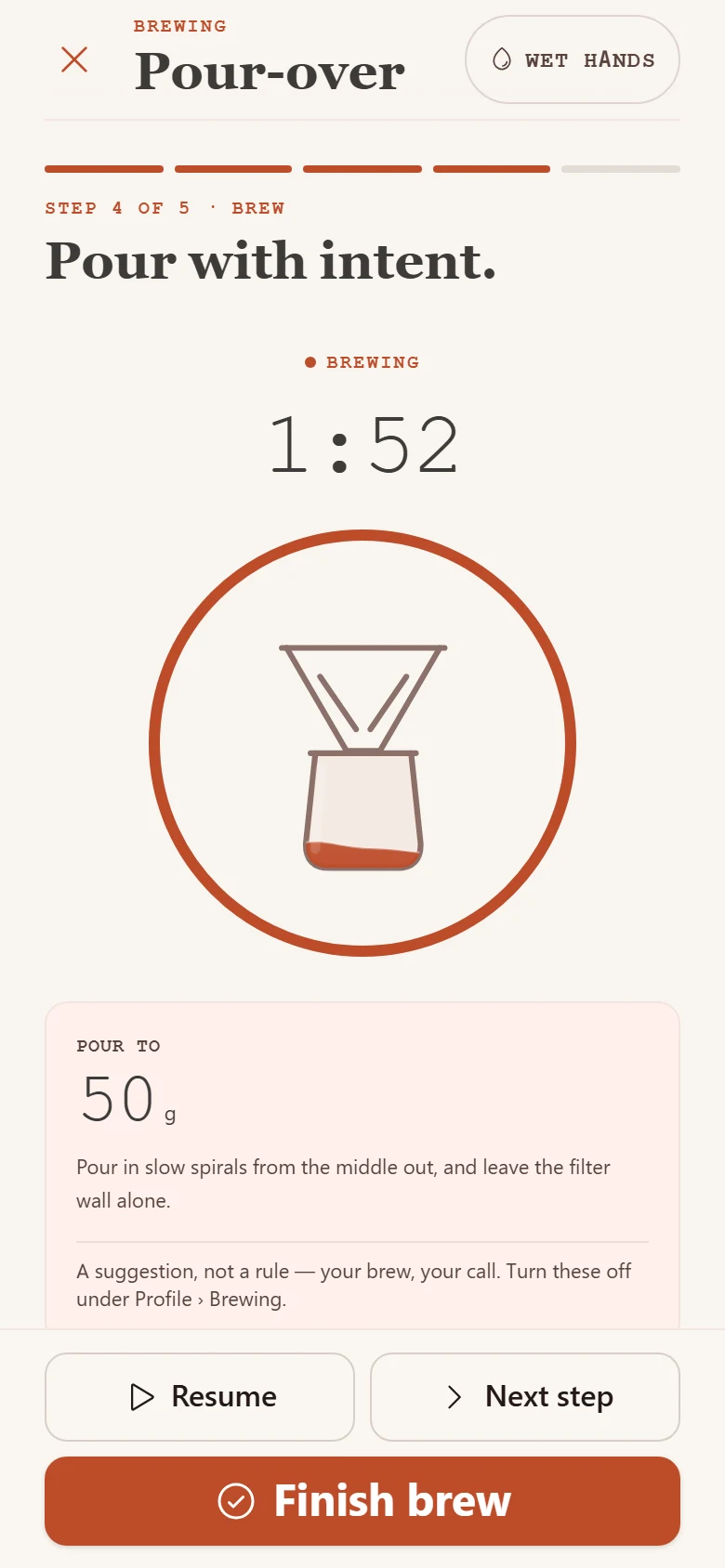
REMEMBER THE CUP.
Copy the intention as well as the numbers
The description gives a drawdown around three minutes while allowing variation and emphasizing taste. That is an important journaling lesson: a recipe time is context, not a verdict on whether you are allowed to enjoy the cup.
Record the grinder identity and your actual setting rather than treating “medium-fine” as a precise universal measurement. Note the filter, dripper, and water source. Preserve the small pauses and the gentleness of the swirls if you are trying to understand the original technique.
If you pour too quickly or overshoot, log the actual brew. An entry containing only the intended recipe cannot explain the cup you just tasted. The difference between intention and execution is often where the useful lesson lives.
Turn a video into your own learning loop
First, save the source link and the recipe you intend to follow. Then brew and record the meaningful differences. Taste when comfortably warm and again as it cools, describing sweetness, body, and finish in your own language.
On the next attempt, change one deliberate detail if you have a reason. If the first cup was enjoyable, repeat it instead. A familiar baseline makes an expert guide more valuable than a constant search for the next technique.
In BrewTrax, preserve the original reference in your recipe notes and label your version clearly. “Hoffmann one-cup approach, adapted for my coffee and grinder” is useful context when revisiting or sharing it. Keep your own tasting observations beside it rather than borrowing the creator’s impressions.
The lasting lesson is not that one recipe must suit everyone. It is that an explicit method makes both repetition and thoughtful adjustment possible.