That was the one.
Give it a way back.
Turn a favorite coffee into a repeatable recipe by preserving actual measurements, equipment, steps, tasting context, and a second successful brew.
Pour a cup. Settle in.
Save what happened, not what you planned
When a cup tastes unusually good, it is tempting to save the intended recipe and move on. But the best part may have happened in the details: a slightly longer pause, a different yield, a gentler swirl, or a bag that had rested longer.
Record the actual dose, water or yield, grinder setting, and meaningful timings while they are still fresh in your memory. If you overshot the water and loved the cup, preserve the overshoot. A perfect-looking recipe that was never brewed is not a reliable way back.
Add one sentence explaining the appeal. “Sweet peach-like aroma, round texture, clean finish once warm” tells future you what you are trying to repeat. A five-star rating alone cannot do that.
Give the recipe enough context
Name the coffee and roaster, method, brewer, filter, and grinder. Record the roast and opening dates when known. Include the technique details that could change the outcome, but leave out unrelated narration.
For espresso, preserve dose and final beverage yield. For pour-over, distinguish cumulative water targets from additions. For AeroPress or cold brew, preserve dilution. These details prevent a favorite drink from becoming an ambiguous row of numbers.
Also note how you served it. A coffee that was perfect with milk may not be your preferred black cup. The recipe should reflect the drink you actually enjoyed.
| Recipe layer | What to preserve |
|---|---|
| Ingredient | Coffee identity and useful dates |
| Equipment | Brewer, filter, grinder, relevant setup |
| Measurements | Dose, water or yield, temperature, time |
| Sequence | Meaningful stages and agitation |
| Serving | Dilution, milk, ice, or black |
| Preference | The qualities that made it a favorite |
Every brew.
A way back.
Track coffee recipes, beans, grind settings, brew steps, and tasting notes across your favorite methods with BrewTrax.
Explore Coffee Brew Tracking App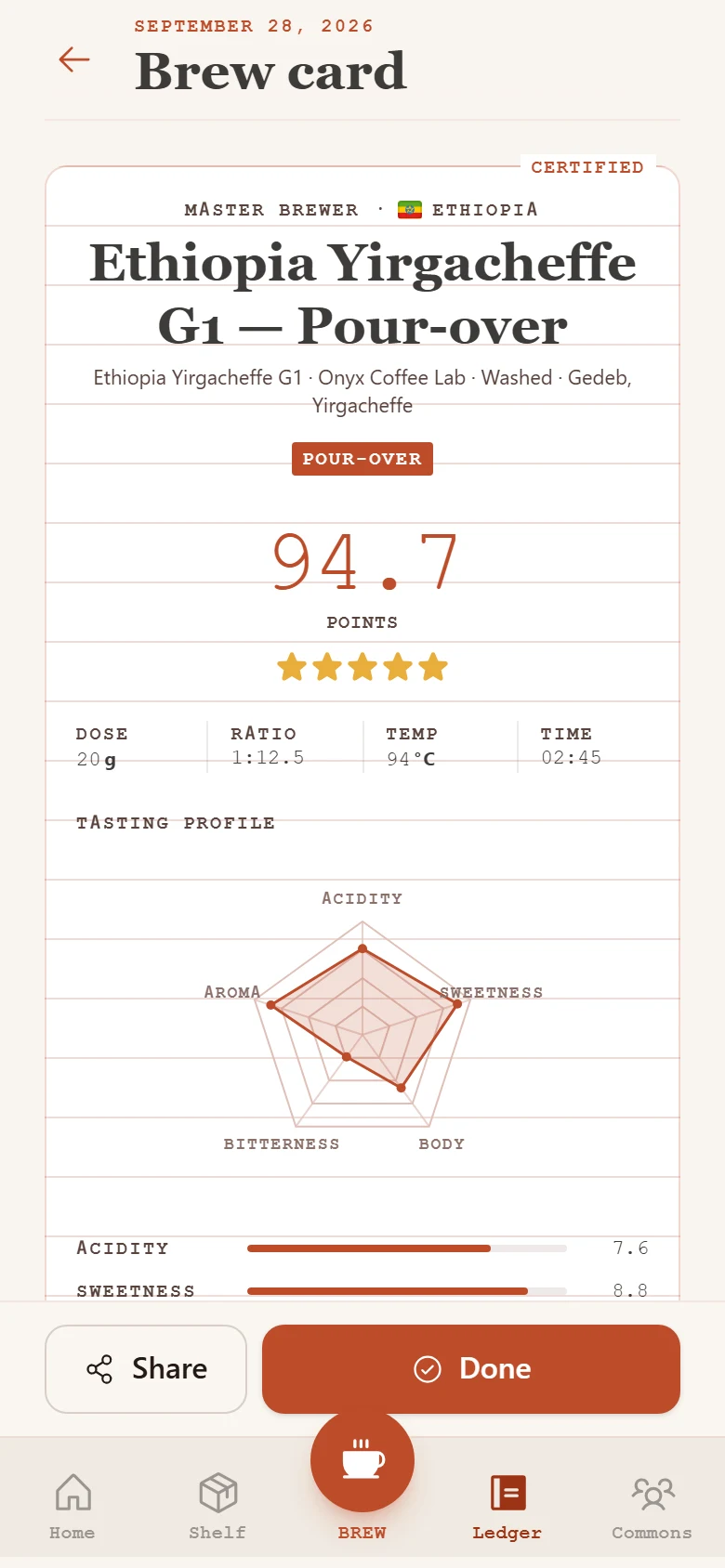
REMEMBER THE CUP.
Give the recipe a second chance
Repeat the cup before declaring the recipe finished. Use the same coffee and equipment if possible. If it tastes similar, you have a more dependable baseline. If it does not, compare execution and context before rewriting the recipe.
Some variation is normal. The aim is to return to the qualities you liked, not to make every sip identical. A useful recipe can tolerate a little everyday variation while still producing an enjoyable cup.
If the second attempt is disappointing, keep both records. Note what changed and choose one next test. Deleting the less successful cup removes exactly the evidence that might make the favorite reproducible.